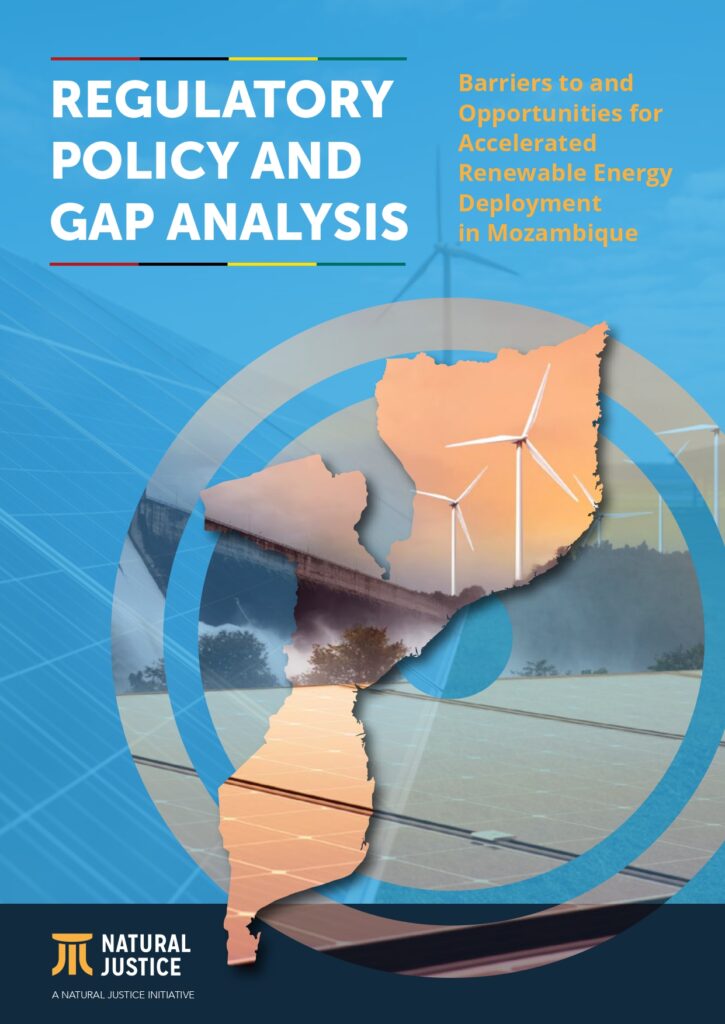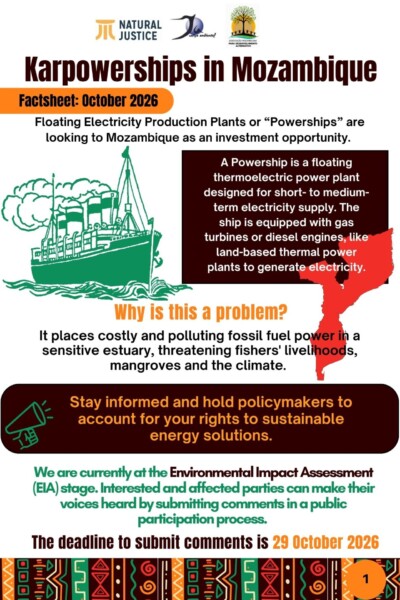
Mozambique stands at a critical juncture in its energy transition. Despite abundant renewable resources — solar, hydro, wind, and biomass — only 36% of the population has access to electricity, revealing deep and ongoing inequalities in energy access and opportunity. This reflects energy poverty and limited grid expansion.
Much of the electricity produced is exported. The national utility, Electricidade de Moçambique (EDM) operates with tariffs that continue to cause it to face financial strain, undermining its financial sustainability. Limited private sector participation, coupled with a centralised electricity market, restricts access and affordability.
The Government of Mozambique (GoM) has made progress towards addressing these structural challenges through various laws. However, to be effective, these frameworks require implementation across energy laws.
Key gaps persist within Mozambique’s policy and regulatory framework which are discussed in this gap analysis.
A just energy transition in Mozambique will, therefore, require not only technical solutions but also social and regulatory transformation. By aligning legislation, improving institutional governance, and embedding equity and participation in implementation, Mozambique can turn its renewable energy potential into a driver of inclusive and sustainable development.
Report available in ENGLISH and PORTUGUESE