Lessons from Kenya and South Africa
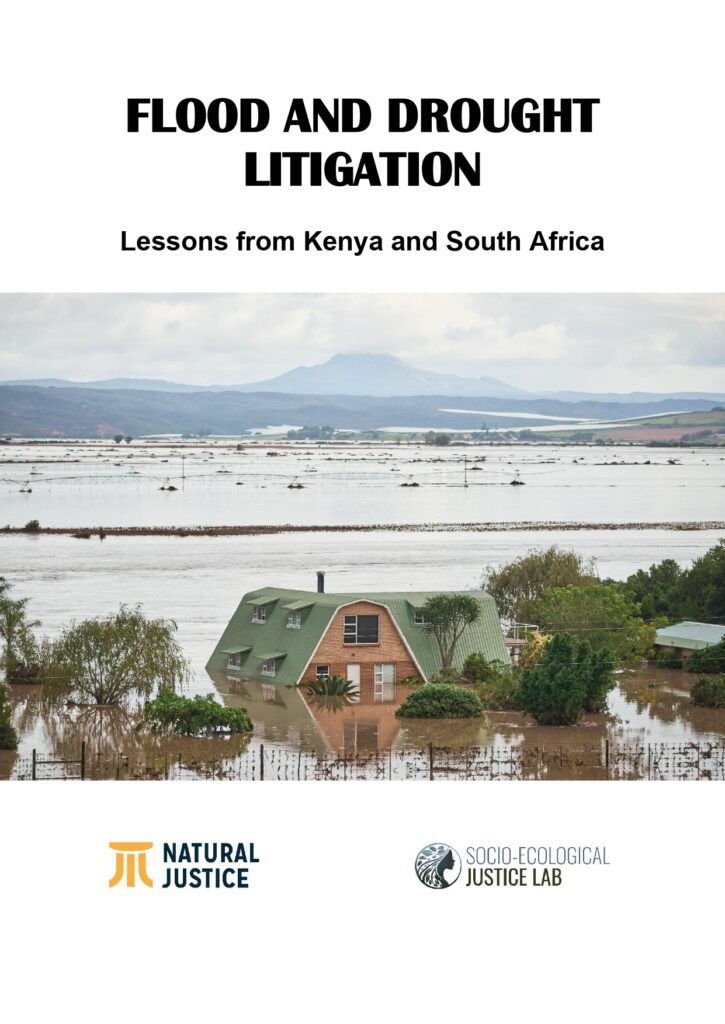
This report studies “flood and drought litigation” with reference to how legal rules and principles are applied in response to flood and drought events, both independently of and factoring in climate change. It does so, given the increase in flood and drought events due to climate change, and on the basis that litigation can be a valuable tool in response to the ensuing climate injustice and human rights violations.
The report tabulates many legal instruments that could support litigants seeking to address flood and drought risks and harms under international, African regional, and domestic Kenyan and South African law. It notes that most of these instruments are not, in general, being effectively or meaningfully invoked by litigants in cases concerning flood and drought risks and harms.
Additionally, the report shows that a vast body of relevant cases have been decided in Kenya and South Africa’s courts.
A key trend in damages cases is that efforts to claim compensation under the law of tort/delict in Kenya and South Africa, respectively, have thus far been largely unsuccessful due to the difficulty in proving causation and foreseeability, suggesting the need to develop the law and embrace novel approaches.
The report identifies the potential to rely on attribution science, drawing from foreign case law, to strengthen future damages cases. The report further highlights potential lessons from decisions of international and regional fora. Several trends emerged from the human rights cases.