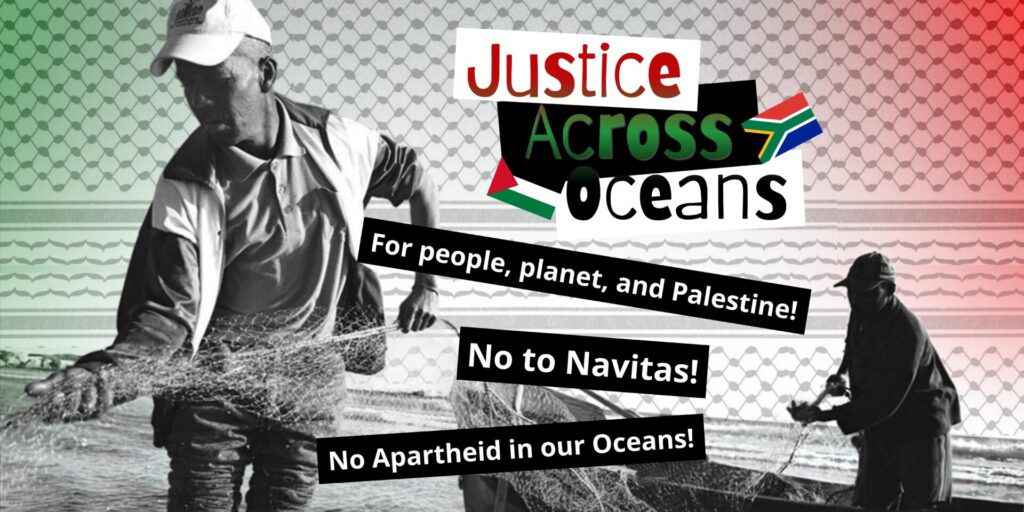
In contrast to its strong moral support for Palestinian peoples, South Africa recently enabled Apartheid Israel to benefit materially from offshore extractive activities that would cause irreversible harm to peoples, climate and environment. Civil society groups are now demanding that Minister Gwede Mantashe urgently stop Israeli fossil fuel company, Navitas Petroleum, from operating in South African waters.
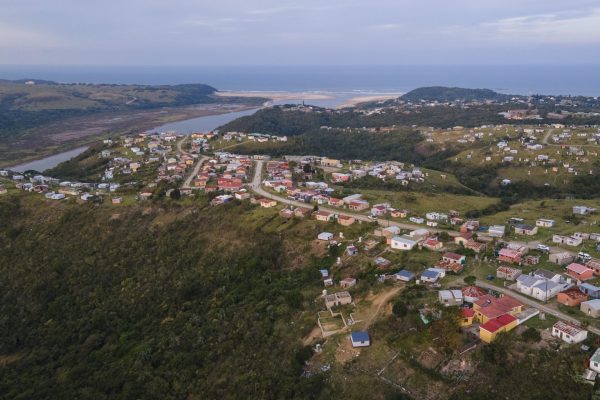
In September 2026, ownership and operatorship rights for Block 1 CBK were granted to Israeli company, Navitas Petroleum, one of the top privately traded earners that supports the Apartheid Israel economy. The block is within an ecologically and economically significant marine region in the Orange Basin on South Africa’s West Coast, along its maritime border with Namibia. Human rights and environmental organisations object to the transaction, and demand that it is overturned urgently. In contradiction with the right to informed participation, communications submitted to Minister Gwede Mantashe and the Petroleum Agency of South Africa, as well as an access to information request, have not been acknowledged or responded to. [1]
Under international and domestic law, and enshrined in its Constitution, South Africa has iron-clad obligations to ensure human rights and the protection of the environment, including the climate and marine systems.
Civil society groups are demanding that Minister Gwede Mantashe act urgently to uphold South Africa’s obligations on human rights, environmental and climate justice, especially its obligations to prevent genocide and unlawful occupation in Palestine. [2]
“There is no climate justice without confronting colonialism, imperialism, ecocide and genocide. There is no climate justice without human rights justice. The systems of capitalism and colonialism underpin the climate crisis and the dehumanisation and oppression of peoples around the world, from Palestine to Congo, West Papua to Sudan, to the Afrophobia in South Africa. We must recognise and resist these systems and highlight the fundamental contradiction: systems built on exploitation and extraction of land, labour, ecosystems and our communities will not serve us justice so we must reject them. We must call for reparations for the climate debt owed to us. We must stop fueling Israel with our coal, with our oil, with our money. And we must remember, there is no climate justice until Palestine is free.”
Tara Nair van Ryneveld, Climate Justice Coalition
In Palestine today, the vicious genocide in Gaza continues, with brutality inflicted daily on families, medical professionals, aid workers, and journalists. Humanitarian conditions are critical: currently 1,9 million people – about 90% of the population – face high levels of acute food insecurity. Widespread ecological destruction has been used as a “weapon of control and erasure”: farmlands, crops and olive groves have been destroyed, water, electricity and waste treatment services have been cut off, and the region is strewn with debris and hazardous material. Savage incursions into the West Bank also continue, and settler violence is recognised as “an integral part of an organized state policy”. [3]
In August 2026, South Africa submitted a dossier to the International Court of Justice (ICJ) regarding Israel’s non-compliance with provisional measures ordered in relation to its case against Israel to protect Palestinian people from genocide. South Africa highlighted that Palestinians in Gaza are traumatised and deprived of essential resources, and reiterated the “obligation to protect the Palestinian people from genocide, including to take all necessary action to prevent and punish genocide.” [4]
Among the rigorous recommendations of the 2025 UN Independent International Commission of Inquiry on the Occupied Palestinian Territory, was that member States to the Genocide Convention take action, including imposing sanctions, against Apartheid Israel and individuals or corporations that facilitate genocide. The Commission was then chaired by this year’s esteemed Nobel laureate, Dr Navi Pillay, who said, “When clear signs and evidence of genocide emerge, the absence of action to stop it amounts to complicity”. [5]
“South Africa is yet to prove its own non-complicity in the Gaza genocide. We are still the largest exporter of coal, going to fuel the genocide and illegal occupation. Instead of imposing an energy embargo, it is outrageous that we are allowing Navitas rights over our natural resources – this further weakens our international standing.”
Roshan Dadoo, South African BDS Coalition
Fossil fuel extraction does not deliver inclusive and sustainable development for African countries. It has not resulted in poverty reduction, economic diversification, or improved livelihoods, and it weakens other parts of the economy. It concentrates and exports immense wealth – at the cost of governments and communities. The most severe impacts of extractivism are on the poor and marginalised communities who own or live near the resources. For West Coast fishing communities, fishing is a cornerstone of cultural identity and social structure, and a main source of income. Marine systems are already under threat from climate change. Exploration activities have impacted on marine and coastal habitats, and restricted fishing communities from entering traditional fishing grounds. Exploitation threatens livelihoods, food security, trade freedom and cultural and spiritual practices. [6]
“Fisherfolk continue to fight for their right to not only exist, but engage in their cultural and economic livelihood activities. Their access to critical water bodies remains under strain, worsening the impoverished status of many of these communities. Their efforts continue to be hampered by commercial exploration activities that prioritise profits over people, preservation of culture, history and our very own environmental protections. Fishing communities in South Africa stand by their fellow fisherfolk in Gaza and oppose the material benefit of Israeli companies such as Navitas.”
Riska Koopman, Masifundise Development Trust
The world is already set to reach average global warming of 1.5 °C within three years. The lowest possible overshoot is 1.7–1.8°C by around mid-century, which requires cuts of 18 per cent by 2030 – starting last year. Limiting and reversing warming cannot lean on the hollow promise of carbon dioxide removal technologies, which remain ineffective, nor on nature-based offsets, which create new land grabs and ecological harm. Block 1 CBK has estimated reserves of about 4.5 trillion cubic feet of gas and more than 3,600 million barrels of oil. There is no room in the carbon budget for this or any other new fossil fuel projects. [6]
Every fraction of a degree warmer increases risks, worsening inequality, affecting food and water security, reducing incomes, and raising the cost of living. South Africans, like much of the world, face a cost of living crisis that is felt acutely by the millions of unemployed. The West Coast is home to some of the poorest communities in South Africa. Their hardships will increase when critical food and livelihood sources are no longer accessible and irreparably damaged by extractive activities. Profits cannot be generated and exported while South African citizens are forced to bear the cost of this dirty industry.
“West Coast communities have persistently opposed fossil fuel development through government processes, and have been consistently ignored. The reality of offshore exploration has been poor consultation and unethical influence tactics. The cumulative impacts of all proposed extractive activities in the region over the long term has not been assessed. The impact on cultural heritage has not been considered, a key concern raised by the South African Constitutional Court in a case that resulted in an exploration licence being overturned in August 2026. It is notable that not a single EIA for offshore fossil fuel exploitation has been declined. Communities are resorting to litigation to protect their rights and livelihoods from fossil fuel companies.”
Delme Cupido, Natural Justice
In allowing an Israeli company to profit from South Africa’s fossil fuel resources, South Africa is directly undermining its international and domestic legal obligations and moral standing on Palestinian liberation, human rights and environmental justice.
A petition has been launched to facilitate public engagement in this critical decision on how South Africa aligns with Palestine in its commercial relations.
For more information and to sign the petition:
Demand Minister Mantashe: Act for people, planet and Palestine, NOT Israeli oil interests!
Notes
[1] Press Release, 25Sep2026. South Africa collaborates with Israel on Orange Basin oil deal | Climate Justice Coalition; Press Release, 20Aug2026. South Africa urged to reject genocidal Israeli’s fossil fuel grab in the Orange Basin
[2] Petition: Demand Minister Mantashe: Act for people, planet and Palestine, NOT Israeli oil interests! | Awethu.mobi
[3] United Nations, 20 October 2025. Gaza Genocide: a collective crime. The Special Rapporteur on the situation of human rights in the Palestinian territories occupied since 1967 (A/80/492) – Question of Palestine;
Transnational Institute, 17 September 2025. Ecocide, Imperialism and Palestine Liberation | Transnational Institute; Amnesty International, April 2026. Human rights in Israel and the Occupied Palestinian Territory Amnesty International; Amnesty International, 2026. Erasing anything Palestinian: Israel’s ethnic cleansing of West Bank Bedouin and herding communities; UN OCHA, 02 October 2026. Humanitarian Situation Report | 2 October 2026 | United Nations Office for the Coordination of Humanitarian Affairs – Occupied Palestinian Territory; UNOCHA, 30 September 2026. Reported impact snapshot | Gaza Strip (30 September 2026) | United Nations Office for the Coordination of Humanitarian Affairs – Occupied Palestinian Territory;
[4] Department of International Relations and Cooperation, South Africa, 28 August 2026, South Africa submits dossier to the ICJ on Israel’s non-compliance with Provisional Measures Orders – DIRCO
[5] United Nations, 16 September 2025. Commission of Inquiry: Israeli authorities and Israeli security forces have committed and are continuing to commit genocide against the Palestinians in the Gaza Strip – Conference room paper (A/HRC/60/CRP.3) – Question of Palestine
[6] Masifundise Development Trust, August 2024. The Coast of Extraction: Mining activities, oil and gas exploration and operations and green hydrogen proposals on the west coast of South Africa; Oil Change International, May 2026. Pipe Dreams: How Oil And Gas Fail To Deliver Economic Development In Africa; Webinar, 08 October 2026. Oil, Occupation & Extractivism – Why SA must repeal offshore oil and gas rights granted to Navitas
[6] United Nations Environment Programme, 2026. Emissions Gap Report 2026: The Point of return – urgent emissions cuts needed to come back from the overshoot of 1.5°C; United Nations Environment Programme, 2026. Limiting Overshoot: Navigating exceedance of 1.5°C and pathways towards return