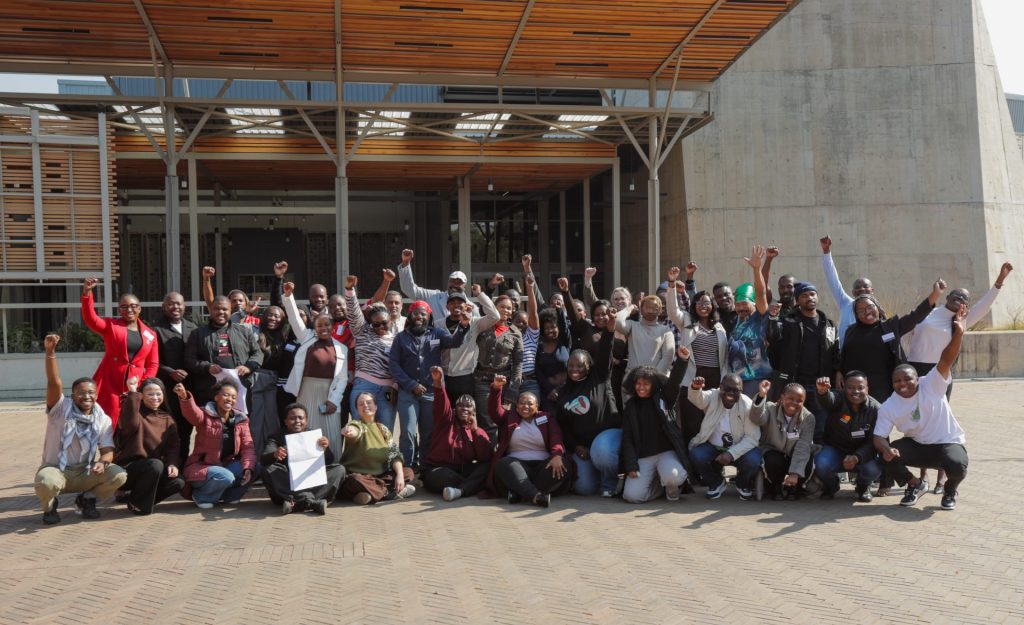
The inaugural Climate Litigation School closed on a positive note with participants expressing how they have been inspired to carry forward the various lessons learned and to further champion the movement towards climate justice.
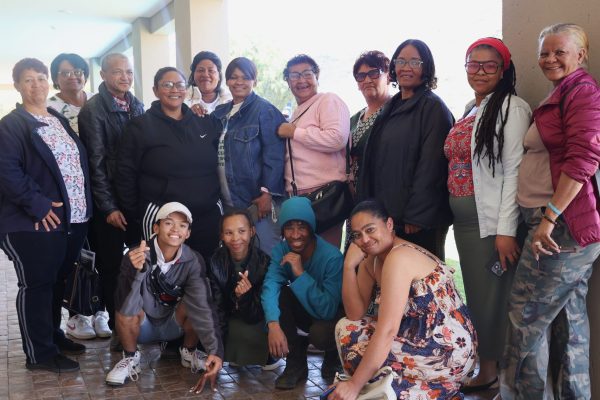
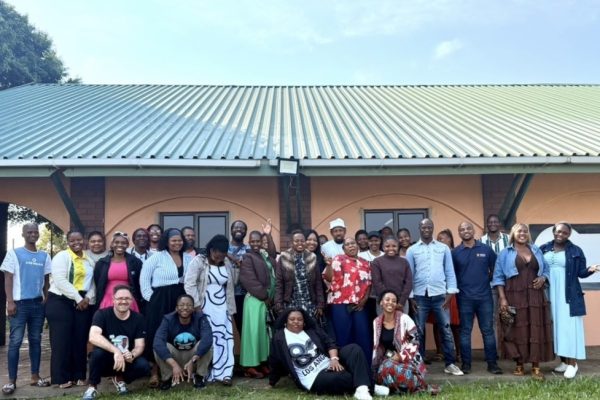
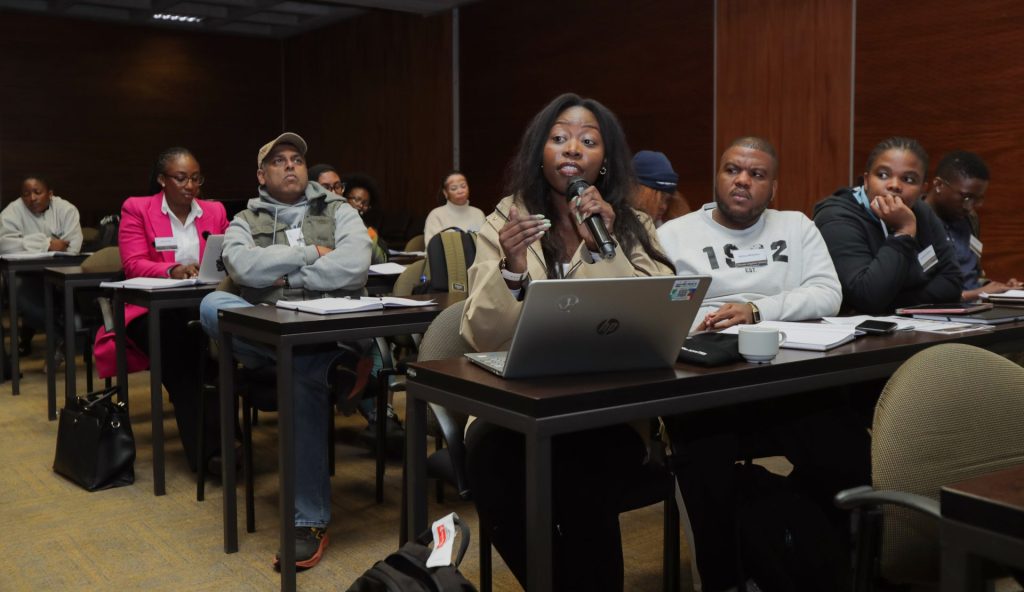
A cohort of 40 vibrant young community activists, lawyers, scientists and students sat for hours discussing, debating and delving deep into various avenues that define and intersect climate litigation. Huddled in group sessions or gathered in auditoriums at the University of Pretoria’s Hatfield campus, the first cohort of Climate Litigation School participants explored the impacts of key court cases, legislation and policies and effective strategies to bolster climate justice. These discussions also highlighted their roles as influencers of change within their communities, disciplines or research areas.
Empowered by knowledge
Interspersed with film screenings and sessions with leading legal experts, activists and practitioners, the curriculum covered a diverse range of topics. Participants were introduced to carbon credits, Indigenous knowledge systems and cultural practices; legal uses of scientific evidence to ethics and confidentiality, data sovereignty, benefit sharing, and community control of litigation narratives – participants were challenged to move away from siloed and lateral thinking to tackle complex issues surrounding laws and policies, nature, people and ancestry.
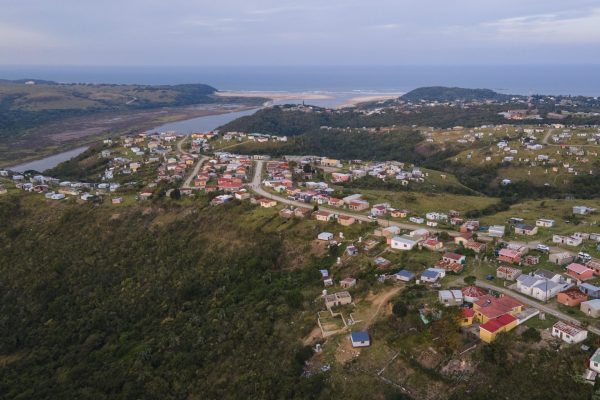
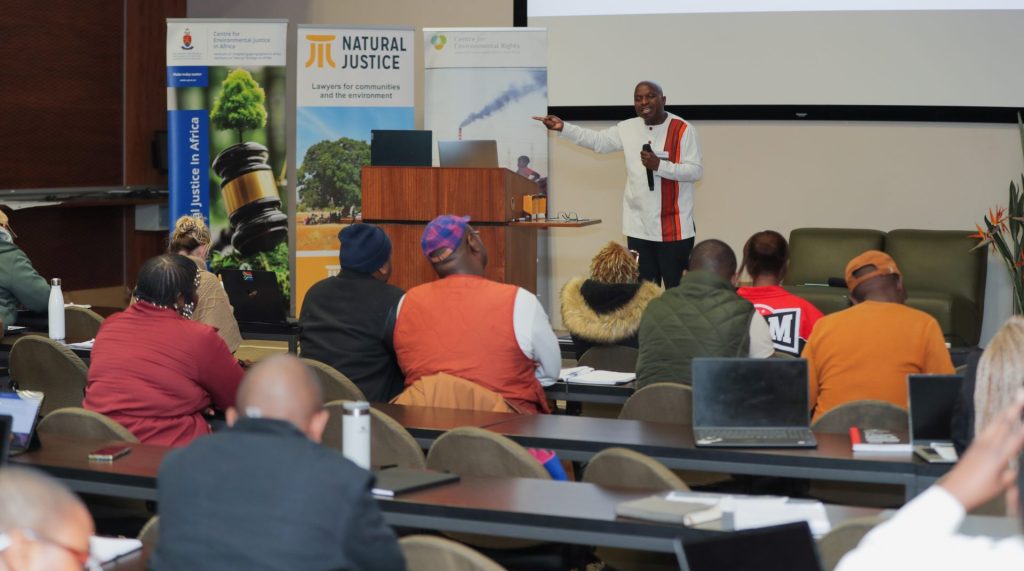
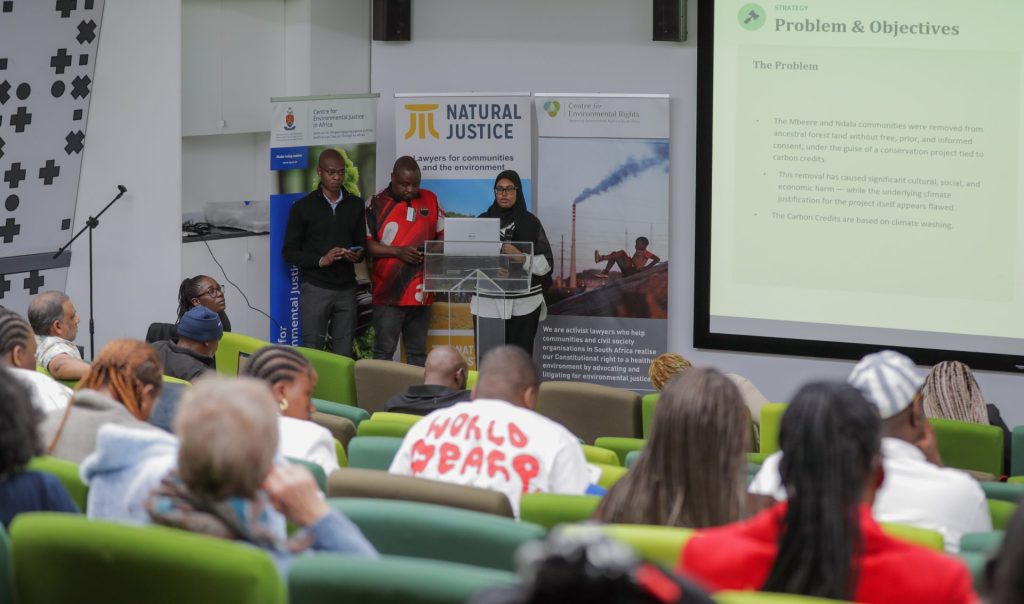
Participants relished in the opportunities to engage guest speakers and facilitators who are seasoned litigators and passionate activists – including the likes of storyteller, social and environmental defender, Sinegugu Zukulu, and lawyer and internationally renowned environmentalist, Cormac Cullinan, who are key players in the Wild Coast case against Shell. At the culmination of the week, they were given simulated case study exercises to tackle and a chance to showcase what they had learned in presentations.
“Nkosi Sekelel’ iAfrika…” reverberated through the auditorium at the Javett Art Centre at the university campus on the final day, as participants boldly sang the South African anthem, setting a patriotic tone to close out the school.
What participants had to say
Siphokazi Kumbuza, from Project 9O by 2030, said that the Climate Litigation School was extremely educational. “As a student activist and researcher, I have learned the importance of not handling everything alone and the crucial role Indigenous knowledge plays in climate justice. I am leaving the school feeling inspired and looking forward to playing my part in South Africa’s just transition.”
Kuhlula Ndlovu, from Humana People to People in South Africa, said: “Climate change is not just an environmental issue, it is also a human rights issue. It would be good if they could expand and extend the CLS programme for the benefit of future climate justice leaders.”
Thandwawuyise Ntshangase, undertaking an LLM in Ocean Governance (NMU), said: “Climate justice is important because climate change is not experienced equally. The communities that contribute the least to the environmental degradation are often the ones that suffer its consequences the most. I believe that responding to climate change is not ONLY an environmental responsibility but also a matter of protecting human rights, promoting equality and ensuring that no community is left behind.”
Fatma Ismail, a legal researcher at the Pan-African Parliament,works in research particularly focused on the development of model laws around climate change issues. She said: “Only about eight African countries have legislation on climate change. As climate justice leaders we need to advocate for the development of this legislation and promote public participation in these processes. The laws we develop need to be context specific and relevant to communities impacted. As a continent we need a common African voice as we grapple with climate change.”
Bakhusele Mathupha from the South African Organic Sector Organisation said: “As we focused on Youth Day in June, our thoughts turned towards creating greater opportunities for young people to develop meaningful skills, become entrepreneurs and grow as leaders. The organic sector offers exactly that – creating pathways to sustainable livelihoods while empowering the next generation to produce healthy food, protect our environment and build more resilient communities.”
Zamindlela Mkhwanaz, researcher at Ndifuna Ukwazishared that: “This is the time and opportunity to give young people a chance to nurture and protect the environment they will inherit.”
It’s not a project, it’s a movement
The school was coordinated by Natural Justice, the Centre for Environmental Rights and the University of Pretoria’s Centre for Environmental Justice in Africa.
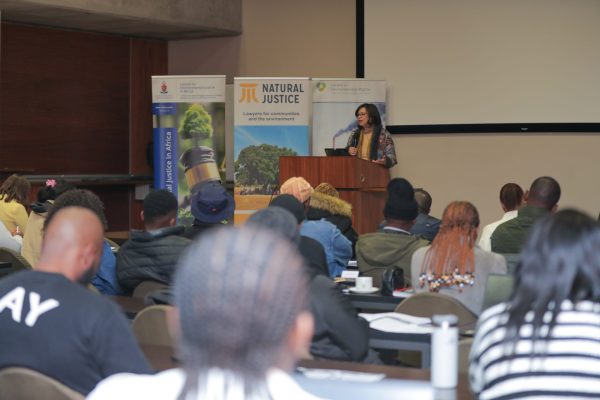
Professor Ntombizozuko Dyani-Mhango, a professor and Head of the Department of Public Law in the Faculty of Law at the University of Pretoria, delivered the closing address to participants. She illustrated the vision for the School as a dynamic space for structured training, peer learning and litigation incubation tailored to the African context.
“It will bridge climate science with traditional knowledge bringing together lawyers, scientists, Indigenous leaders and community advocates. By integrating scientific evidence and Indigenous wisdom, we can develop legal strategies that are both technically robust and culturally ground.”
She further highlighted that, “the Climate Litigation School is not just a project – it is a movement. It is a call to action for all of us to build a more just, inclusive and sustainable future. Together we can challenge systemic injustice, uphold constitutional rights and ensure that Africa’s climate future is shaped by those who live in it every day.”