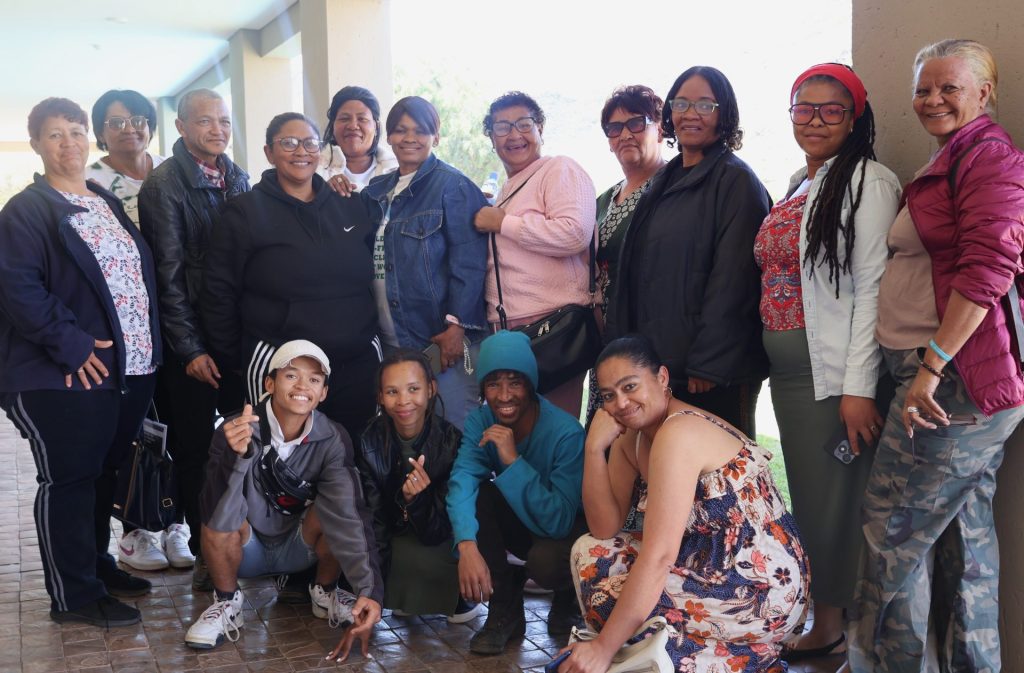
The Earth’s minerals have for decades been contentious. In South Africa, the scramble for minerals is etched in history through events like the Gold Rush and the Anglo-Boar War. It showed how the influx of fortune seekers, opportunistic investment injections and rapid urbanization have vast impacts on communities and are not always sustainable, because mines dry up, but communities remain. Today issues of unemployment, poverty, health risks and abandoned, unrehabilitated mines persist in some communities. It was with this backdrop, that a group of representatives from various small towns in the Northern Cape, came together to consider their rights regarding current mining law developments and the power they hold to take action.
Spring blooms and 19th century copper booms
Namaqualand is rich in many ways. Each year, tourists flock to the West Coast – up through the Northern Cape to discover and photograph wildflowers in bloom, to explore the countryside’s serene landscapes, and to experience the warm hospitality of its people. Corporates and developers have been equally attracted to its hidden gems and minerals.
A town like Springbok, along the N7 route, situated within the Klein Koperberge (Small Copper mountains) is typically known as the area where the Nama pastoralists roamed. In its history ‘Namakwa’ was named for the nomadic Nama people from South Africa, Botswana and Namibia. Springbok is the largest town and also the administrative and commercial hub in the Namaqualand. It is a main shopping destination for smaller outlying communities and towns such as Garies, Bitterfontein, Vanrhynsdorp and Port Nolloth. It is used as a stopover town for travellers from South Africa to Namibia – often referred to as the “gateway to Namibia” with its proximity to the border.
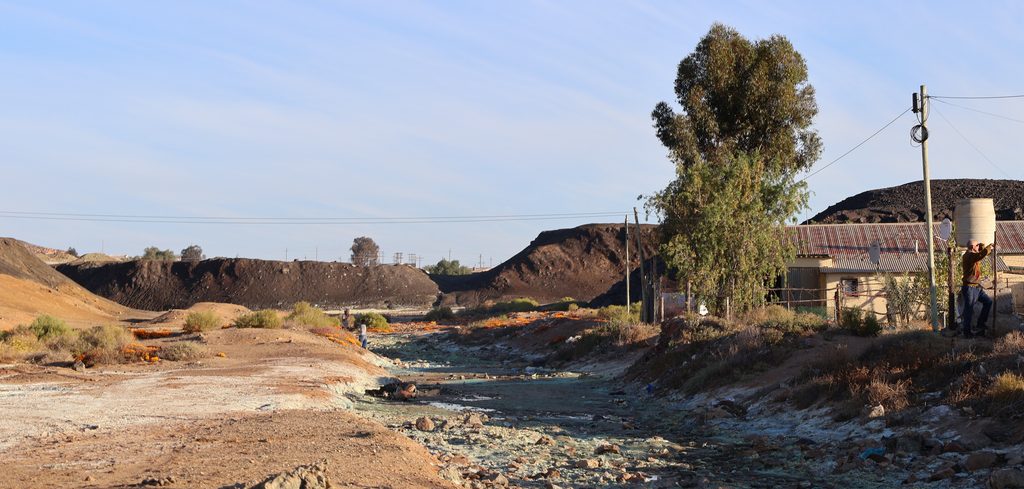
Okiep hosts one of the oldest copper mines, which has been abandoned for around 40 years.
Copper mining in Springbok dates back to 1685, but it wasn’t until 1862 that commercial mining began in earnest with the Blue Mine, South Africa’s first commercial mine. In the 1870s there had been an increase in copper mining activities, particularly in Okiep, located about 8km from Springbok. Many aspirational miners flocked to the area, but the lack of drinkable water in Okiep meant people looked to Springbok for a decent water supply, making Springbok key to mining activities.
Mineral Resources and Development Bill – understanding your rights
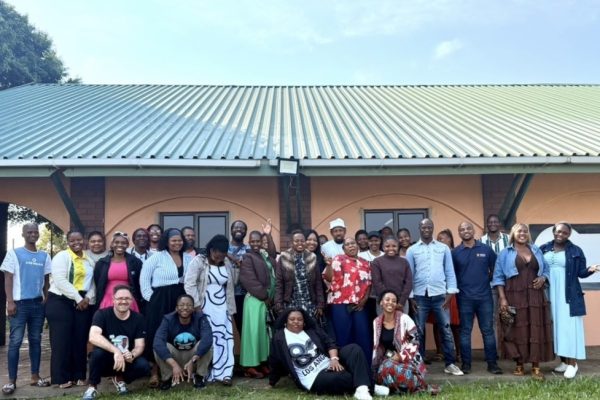
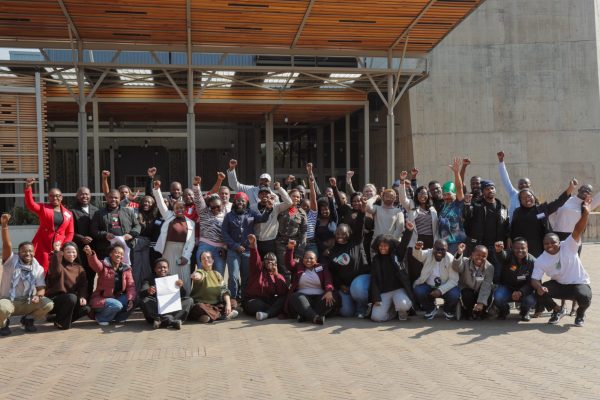
It was in Springbok, that the Ubuntu Rural Women and Youth with Natural Justice, decided to host an empowerment workshop regarding the Mineral Resources and Development Bill (“MRDB/Bill”) and to learn about the various communities the participants came from.
The Bill mainly impacts rural and mining-affected communities in South Africa. It introduces many changes to South Africa’s existing mining laws. Once the MRDB becomes law, it will amend the Mineral and Petroleum Resources Development Act of 2002 (MPRDA).
The workshop introduced participants, who were mostly women, to the impacts of the Bill, their rights to comment on it and it provided a space for reflection.
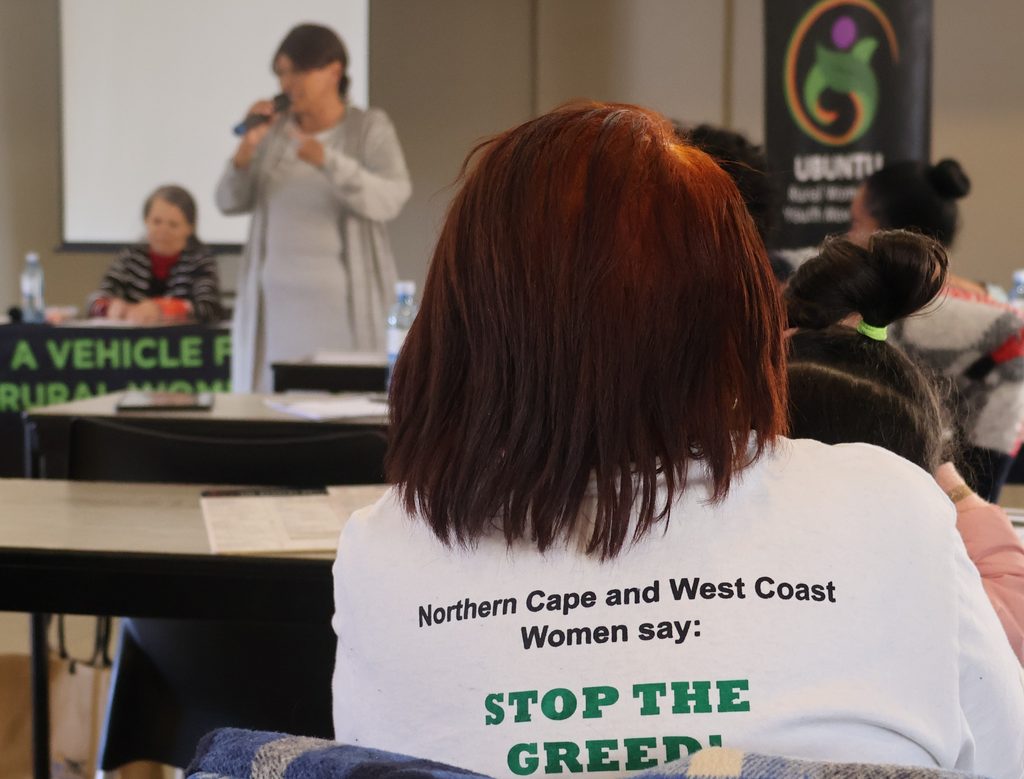
Vainola Makan from Ubuntu Rural Women and Youth said: “The workshop intervention with the mining-affected women in the Northern Cape showed that when women are given the right information in an accessible form, they can integrate such knowledge into their own understanding of their context and engage powerfully in policy and decision-making processes to improve the quality of their lives. The women were very excited and accepted the challenge to engage and assert their voices in a coordinated way with their local, provincial, and national governments.”
The Bill aims to introduce artisanal and small-scale mining permits, change the definition of community and meaningful consultation, introduces the definition of interested and affected parties, and give effect to Section 24 of the Constitution (the right to a healthy environment). The Bill aims to speed up mining projects and ensure that more minerals are processed in South Africa instead of being sold raw to other countries.
Jacqueline Rukanda, Programme Manager of the Affirming Rights Programme at Natural Justice said: “After touring Springbok, I saw a town carrying so much mining history. I learnt how tremendously the people and the land had given to copper mining since 1870 and continue to give today. However, I was disappointed to see that until today, land rehabilitation and reparations from the impacts of mining have not been given the importance they deserve. These two critical actions can play a positive role to redress the stark inequality in Springbok. The beautiful and hardworking people of Springbok, and their future generations deserve them.”
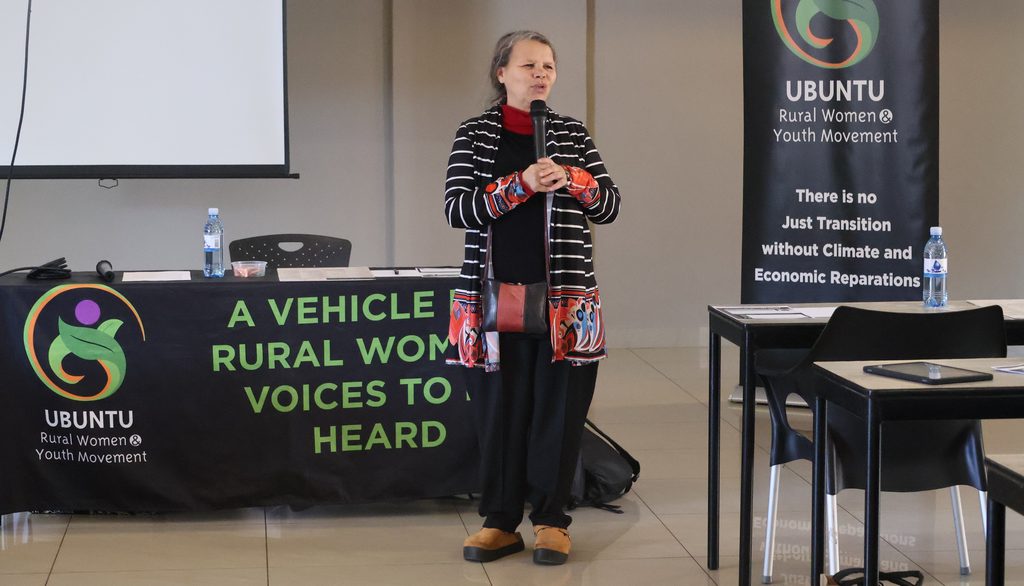
Vainola Makan from Ubuntu Rural Women and Youth movement.
Okiep
Okiep – from the Nama word ’U-gieb meaning: “the great, brackish spring”.
With about 6500 inhabitants, the Okiep community falls under the Nama Khoi Local Municipality. The area feels like a time capsule. In the 1870’s it was thought to hold the richest copper mine in the world. In 1902 the community faced the “Siege of Okiep” a connection to the Anglo-Boer War, where British forces and local Cape Copper Company employees defended the town using fortified blockhouses.
Okiep bears the visible remnants and scars of what once must have been a bustling community. A bare-bones structure of local blockhouses or barracks stands steady. Local attractions that appear to have survived include the 1882 Cornish Beam Pump,industrial heritage from the 19th-century and the Old Smokestack – a lengthy stone chimney left behind by the Cape Copper Company. Another historical edifice is the oldest Anglican Church in South Africa, also constructed in 1921.
At the heart of the community, surrounded by mounds of dug up earth and rocks, lies the now abandoned copper mine – believed to be abandoned for several decades. The large mounds stand in stark contrast to the houses and amenities built around it and looks out of place against the backdrop of the neighbourhood, as young and old traverse across it.
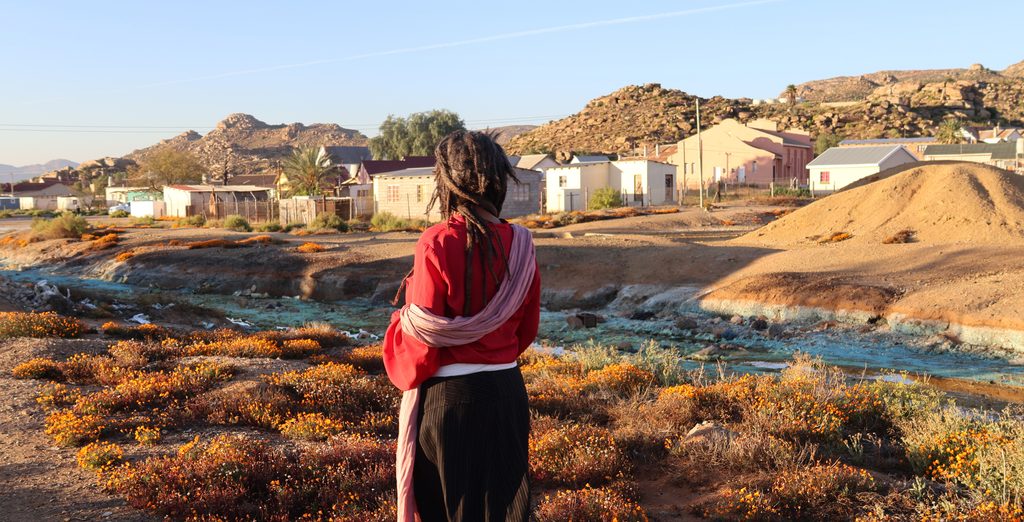
The people living there, are concerned about the increase of a blue-ish/ turquoise substance developing rapidly on the ground creating an overwhelming acidic stench. They are worried about the health implications of the substance which they fear could be seeping into the groundwater.
Participants who attended the workshop from Okiep had this to say about the community.
Neiltin Soul, who is currently a resident of Saldanha Bay, but who knows Namaqualand area and said he lived in Okiep for years. A previous mine worker, he moved to Okiep when he got a job at a mine in the nearby Alexander Bay.
Neiltin said: “The biggest challenge with the environmental issues in Okiep is the dust when the wind is blowing, and the acid due to the mining activities left by the copper companies many years ago and this has been negatively influencing the community for a very long time.”
“Currently there is a dam that has cracks in it and the water is running down all these dry riverbeds and it’s spreading these acids to the whole community and the stench that goes with its is unbearable. It is an acid stench that you can smell for some distance. And it’s really not good for the environment and for the health of the people in the community especially when the wind is blowing. There’s dust all over the place and it’s affecting people in a very negative way – a lot of negative implications on people’s health, a lot of lung diseases because of this dust and I believe the acid in the air is causing a lot of pollution.”
Corné Hendricks, said it was very peaceful it’s not as busy as it is in the big city. “Here its peaceful and you can go out into nature but when mining companies come it disturbs the peace.”
Her partner Lemuel Soul, (who is Neiltin’s son) added that within the peace, there is a lot of poverty.
“A lot of people talk about the old days when OCC were running things and when the mine was in control and stuff. But now, all you can see when you go to Okiep is the destruction of the mine and it looks like nothing came from it, actually,” he said adding that many people were too afraid to speak about the issues.
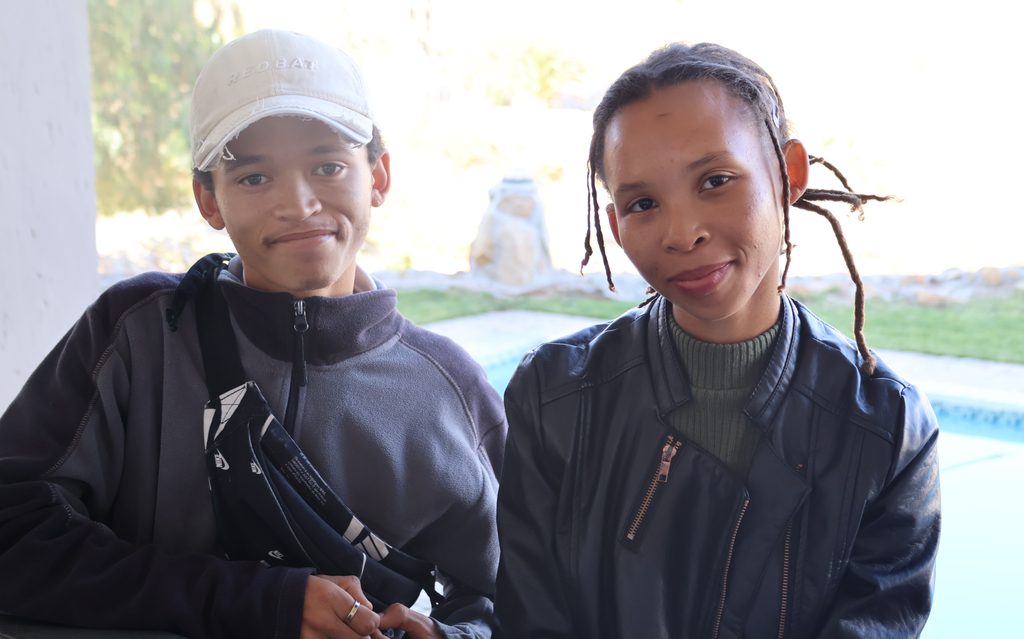
Lemuel Soul, left, and Corné Hendricks live in Okiep.
The couple had both recently taken up tennis as a hobby. Lemuel said it helped with his confidence and he feels like he can be more vocal about issues affecting youth in the area and the tennis has helped him realised that many younger people had a lot to say and were outspoken but he feels like their focus needed to shift to important things.
“They speak out about nonsense and then they end up fighting over the wrong things. They should speak up about the right things.”
They both agree that community needs unity.
Corné added: “Personally, I just want to see the community come together and be better connected with each other, because there’s a lot of disconnection. People are separated because they don’t trust each other. I hope that what we’re doing with the tennis, we can involve them, teach them to be more united with each other. So, it starts small and it grows.”
The real gems of Namaqualand
Okiep’s story is not unique. Throughout the workshop participants shared stories of how mining has had an impact on their communities. One participant felt so inspired by what she heard she wrote a poem.
A poem by Hendriena Dejongh, from Bulletrap
A voice echoes through the land
Please help me, take a stand
To know to use to shape the law
And make them see what we already saw
If you’re at the back
Please take a step
Take action for your satisfaction
To know your right
And to start to fight
For consent, not consolation
To the people of our nation
We have to empower ourselves
Because it’s our right for a clean Bill of health
It’s your right to fight
But every hour that goes sour
Food taken out of the mouth
From north to south
It’s not nice
To lose a slice
Of what’s yours and mine
With nothing to sign
So let’s stand and raise our hand
Cause there’s a solution for the constitution
So let it bloom like a flower
Because woman is power!
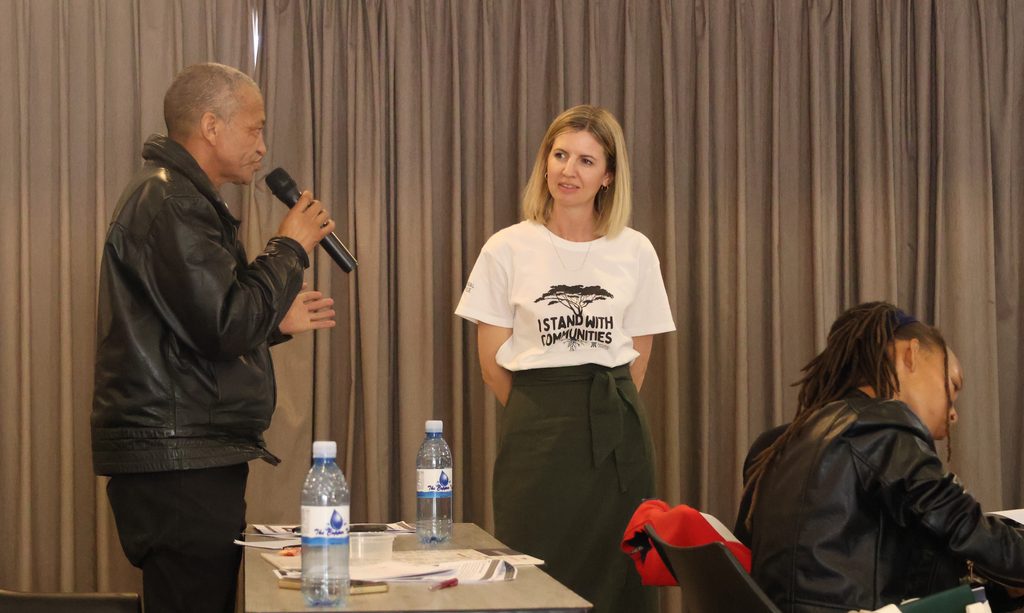
Neiltin Soul from Saldanah Bay shared his experiences. Next to him is Amelia Heyns from Natural Justice.
Amelia Heyn’s Natural Justice Programme Manager for the Standing with Communities Programme said: “The Northen Cape is emerging as a new mining frontier, attracting billions of rands in financial investment. But the current race to untap the province’s rich mineral resources is not asking how it impacts on the communities beyond the live cycle of the mine. In towns such as Okiep where mines have closed, the community has to live with the environmental and social consequences of the closed mines. There has been little accountability. Any new development has to include adequate rehabilitation and future protection for those left behind when mines pack up and leave.”
While investment is needed in small towns, there are many opportunities for development above the ground. Through proper community consultation, those who are seeking investment opportunities might unearth real gemstones hidden in the Northern Cape, it’s people.