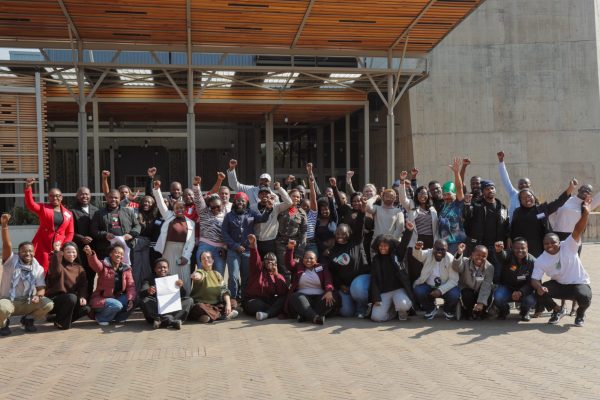
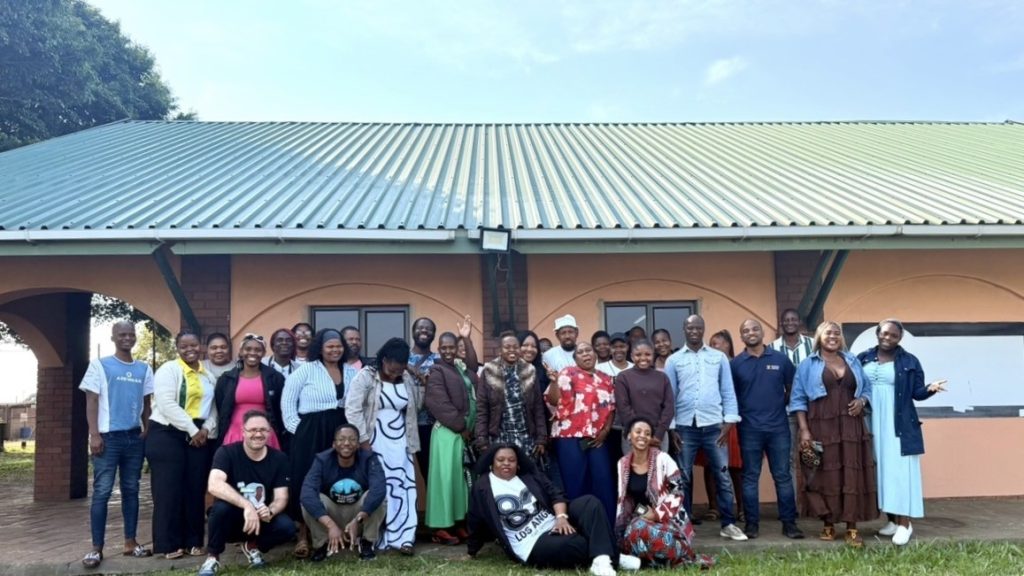
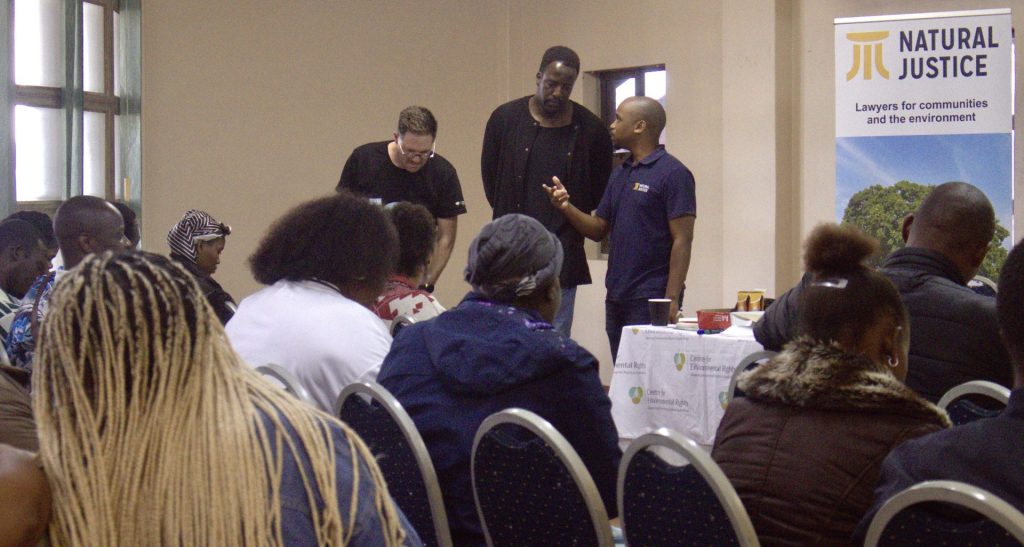
In July 2026, community members, environmental organisations and legal experts met in Richards Bay to discuss climate change, environmental justice and South Africa’s energy transition. The workshop was hosted by the Centre for Environmental Rights (CER), together with the South Durban Community Environmental Alliance (SDCEA), Natural Justice (NJ) and Fossil Free South Africa’s Fossil Ad Ban campaign. Its purpose was practical: to strengthen the ability of local communities to take part in environmental decision-making and advocate for an energy future that does not leave them behind.
Why Richards Bay matters
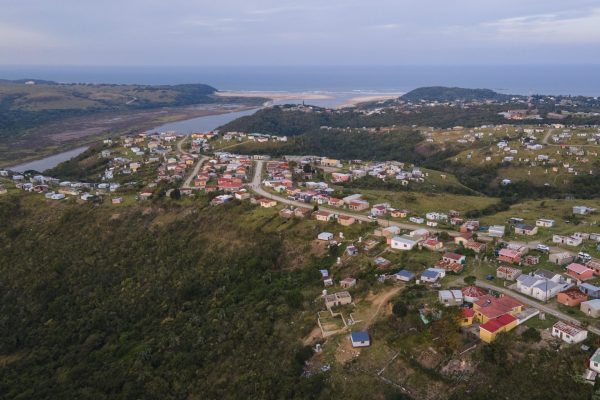
Richards Bay is a significant point of industrial growth in South Africa and is central to plans for liquefied natural gas (LNG) infrastructure, gas-to-power plants and pipelines linking the region to major urban centres. Although these developments are often presented as sources of jobs and economic growth, they also raise serious concerns about air pollution, land use, livelihoods and long-term climate impacts.
Participants discussed how these impacts are experienced differently by women, children, fisherfolk and people living with disabilities. This made clear why community voices must be heard before decisions are made, not after projects have already been approved.
Climate justice, community participation and legal rights
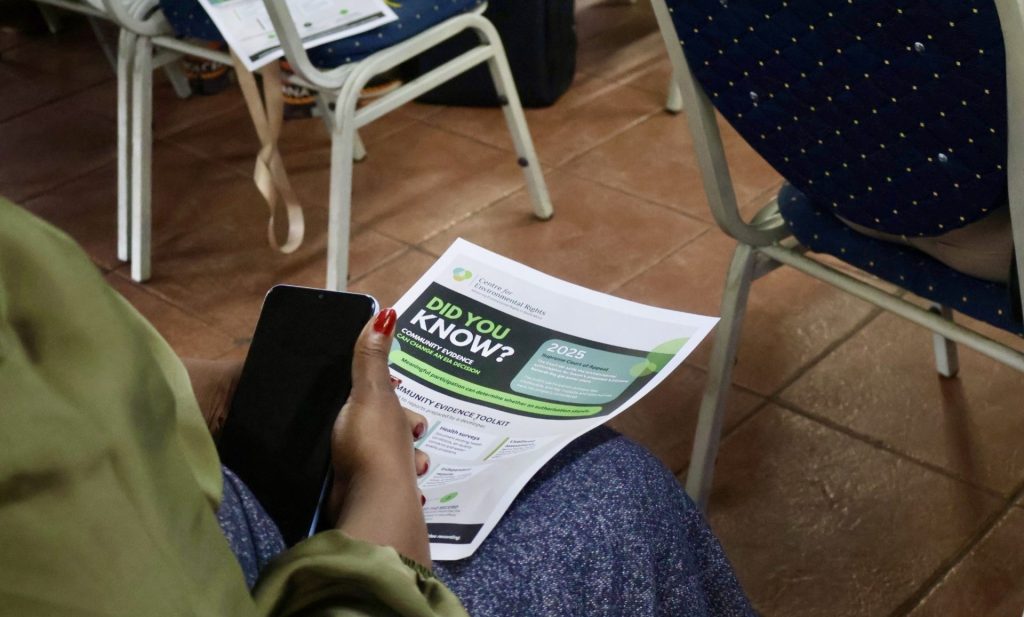
The workshop explored the causes and effects of climate change and what a just transition should mean for affected communities. Participants worked through Environmental Impact Assessment processes, the right to submit comments and objections, and ways to hold authorities and companies accountable.
Legal empowerment was an important part of the discussion. Communities need to understand the tools available to challenge harmful decisions, seek remedies and ensure that environmental laws are followed. Participants also identified the value of media engagement, coalition-building and collective mobilisation in making local concerns harder to ignore.
From greenwashing to social licence
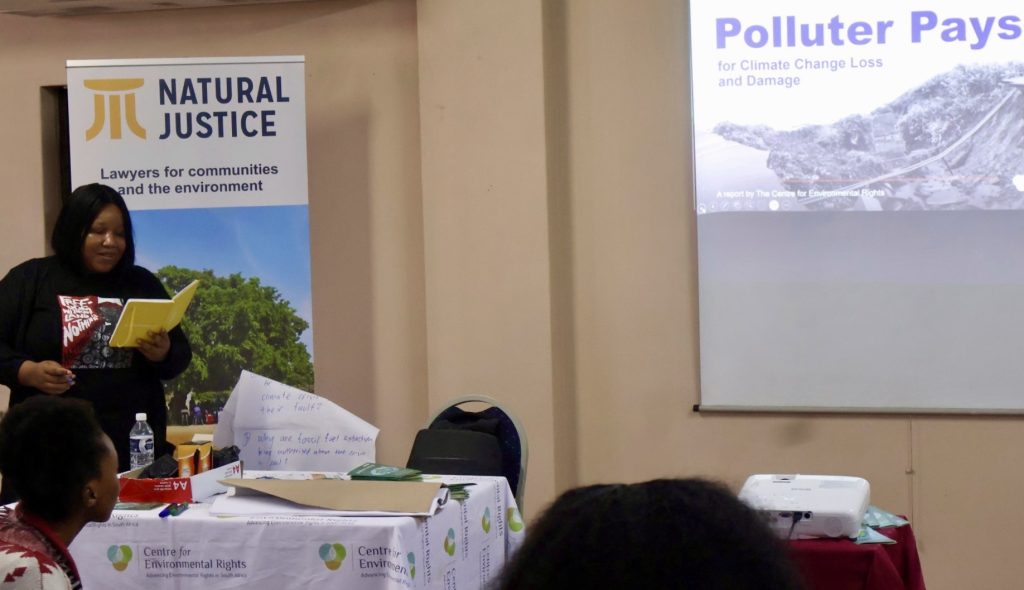
Meaningful participation also depends on access to accurate and trustworthy information. Fossil Free South Africa’s Fossil Ad Ban campaign led a session on climate information integrity and how fossil fuel companies use advertising, sponsorships and corporate communications to build public acceptance, or a social licence, long before formal consultation begins.
Using the Advertising Regulatory Board complaint about TotalEnergies’ marketing of Excellium Diesel as a case study, participants considered how claims such as “lower CO₂ emissions” can influence public perceptions even when the supporting evidence is limited or highly qualified. The discussion showed that greenwashing is not only about advertising; it shapes how communities understand fossil fuel projects.
The experience of communities affected by LNG developments in Cabo Delgado, Mozambique, also prompted difficult questions for Richards Bay: Whose interests are served by promises of jobs, development and energy security? Whose voices are amplified, and whose experiences are left out?
As Noxolo Mfocwa of the Fossil Ad Ban campaign explained, climate misinformation increasingly takes the form of “selective, incomplete or exaggerated environmental messaging” that builds social licence for fossil fuel expansion. Communities can only make informed decisions about their land, water, livelihoods and climate when the information before them is accurate, independent and transparent.
Where do we go from here?
The strong participation in Richards Bay showed both the appetite and the need for continued capacity-building. The next step is to deepen collaboration between community groups, environmental organisations and legal advocates, while ensuring that people have the information and support they need to defend their rights and shape the decisions that affect their future.