
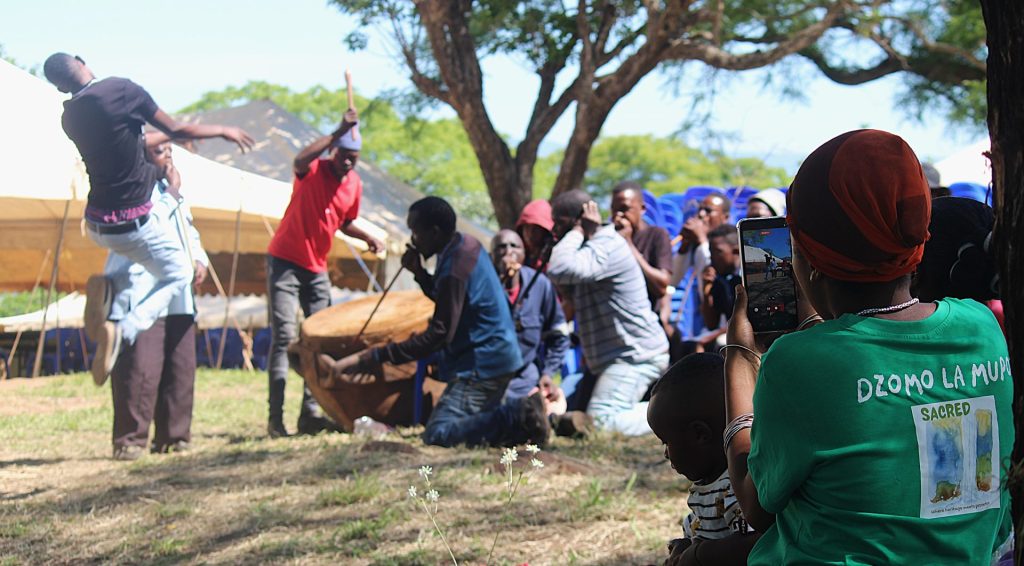
From within the sacred forest of Vuu ḽa Vho Tshitavhe in Limpopo, a whistle-like sound reverberates from a group of men performing on reed flutes made from musununu. Together, the flutes form a flowing melody, accompanied by a deep, steady rhythm of traditional drums. As we watch the group draw nearer, we are hypnotised by malogwane, the leader of the tshikona, who controls the movement and rhythm of the dancers.
The tshikona, a ceremonial and spiritualdance of the Vhavenḓa people of South Africa, marks the opening of the launch of the Vhavenḓa Biocultural Community Protocol: Miṱodzi ya Zwifho zwa Vhongwaniwapo (Tears of Indigenous Peoples’ sacred natural sites) on 6 December 2025.
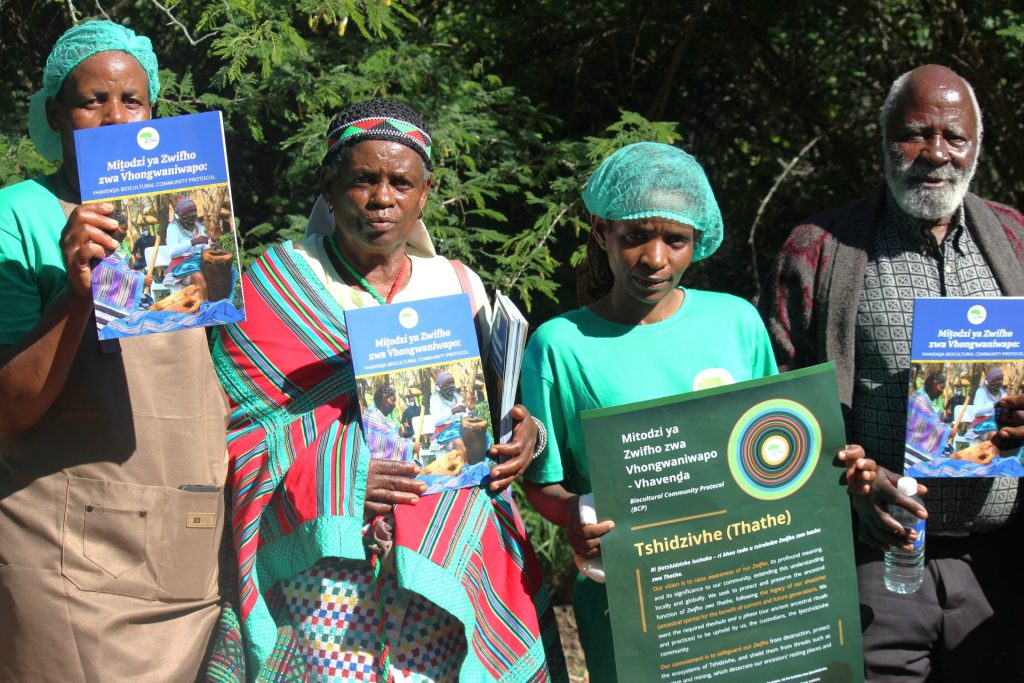
Eleven Vhavenḓa communities – Luvhola, Mbwenda (Hamagoro), Mulambwane, Phiphiḓi (Haramunangi), Songozwi ḽa Vhadzanani, Tshidzivhe (Thathe), Tshiluvhi, Tshiṱungulu, Tshivhazwaulu, Vhuṱanḓa and Vuu ḽa Vho Tshitavhe – have worked together for three years to record their history, heritage, cultural and customary practices and relationship with the environment in a Biocultural Community Protocol (BCP).
At the launch of the BCP, they performed many of the practices that have been recorded in the document itself, along with information on their governance structures, their natural environment and their unique customary practices.
The role of the Vhavenḓa people as stewards of mupo
Indigenous peoples around the world, known as Vhongwaniwapo in Tshivenḓa, have long been stewarding the environment and its biodiversity. Their Indigenous knowledge and intangible cultural heritage are deeply intertwined with their relationship to the environment. For the Vhavenḓa, this connection is reflected in the Tshivenḓa word for environment, ‘mupo’. Mupo refers to “all of creation not made by humans”, including land, water and sacred natural sites. It is that which sustains life and harmony and forms part of the ecological-spiritual balance of the Vhavenḓa.
As with many Indigenous communities globally, the territory and sacred natural sites of the Vhavenḓa are under threat. Zwifho (sacred natural sites) form the spiritual and cultural heartbeat of each community, binding their ancestors, royal families, and communities to the land as if with an umbilical cord. One such threat is the Musina Makhado Special Economic Zone (MMSEZ). This development will come at a great expense to the Mulambwane community, leading to the destruction of natural forests, medicinal trees and plants, the removal of ancestral graves and the depletion of their water sources.
For a community so deeply connected to mupo, protection of their Zwifho is at the heart of this BCP. It is a response to the various threats to Zwifho – of which the MMSEZ is only one. Threats also include large-scale agricultural, the turning of sacred sites into tourist facilities, pollution and degradation of water sources and the loss of their cultural practices,
A Biocultural Community Protocol is a document created by an Indigenous community to explain who they are, how they live, and their interdependent relationship with their territory, natural resources, and cultural practices. It sets out a community’s own rules, procedures and values for how outsiders like companies and governments should interact with their territory, knowledge, and natural resources. It is a powerful tool for articulating free, prior and informed consent.
The right to protect what is sacred
“With their Zwifho under threat, the voice of the Vhavenḓa expressed in their BCP contains the ancient wisdom of the community that is at the core of protecting the environment”, says Makoma Lekalakala, Director of Earthlife Africa. The Vhavenḓa, like Indigenous communities around the world, are marginalised and criminalised for safeguarding and protecting the environment. “But protecting the environment is not a crime” says Lekalakala.
She adds that if Indigenous communities were allowed to practice their protocols, they would be able to freely exercise their right to give collective consent when their environment is under threat.
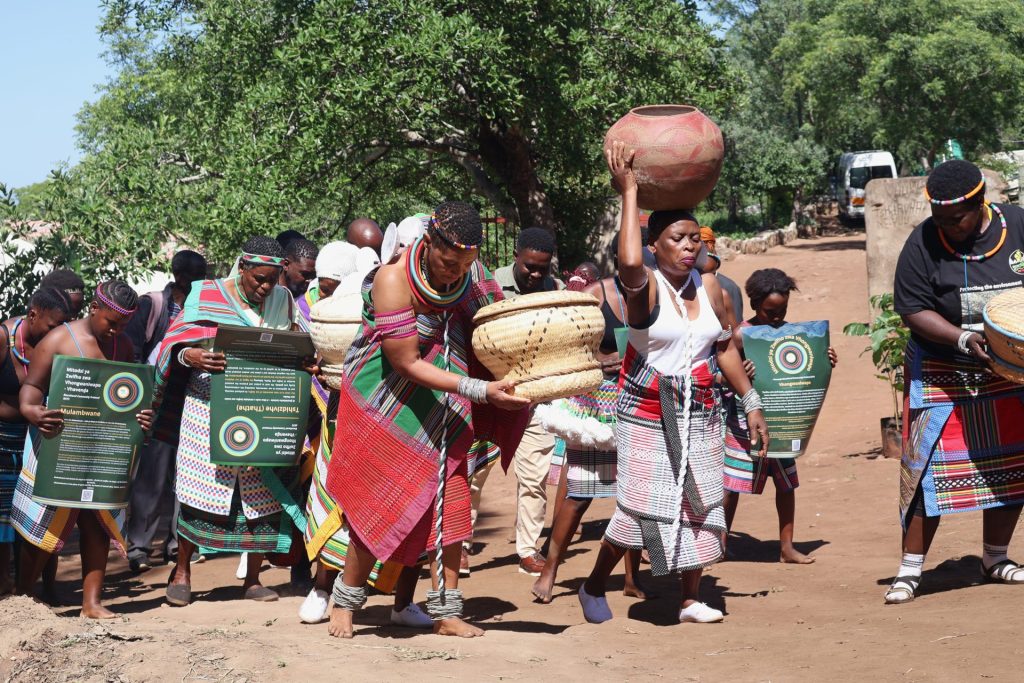
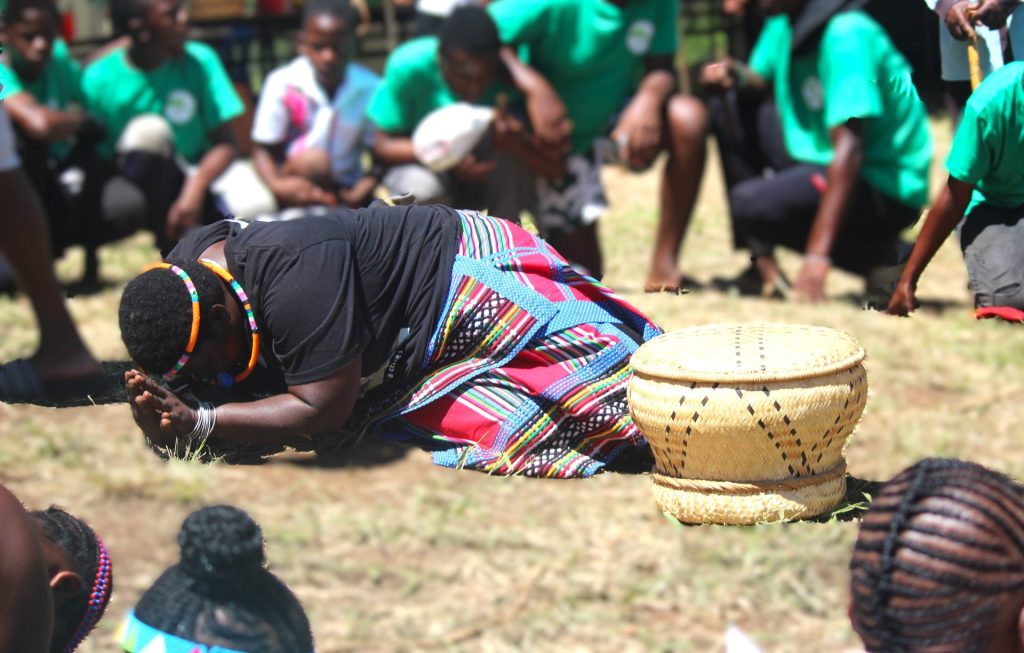
At the BCP launch, the tshikona is followed by a powerful dance by Vhomakhadzi, women with a sacred and spiritual role in their Vhavenḓa communities. During the dance they carry mufaro, a lidded basket made from the muluwa tree, and ululate as they read out the vision statements of each community. As they collectively move forward, holding their baskets in front of them, it is as if they are reclaiming what rightfully belongs to them.
Vhomakhadzi performs a critical role in safeguarding Zwifho, traditionally regulating access and protecting it from outside visitors. The BCP journey was led by Makhadzi Mphaṱheleni Makaulule, Director of a community organisation called Dzomo ḽa Mupo, meaning ‘voice of nature’.
For her, this has been a very important process for her community. “The launch of our Biocultural Community Protocol is a historical day. It is a historical mark point for the youth, the children and those not yet born, that the elders have shed the tears. It is the tears that have been moving from the chins of our ancestors when they were dislocated and removed from their birthroots home, the Zwifho. All of the elevenZwifho are marking the footprint that should continue for the coming generations. It is a day of joy, filled with laughter, dance and eating indigenous foods.”
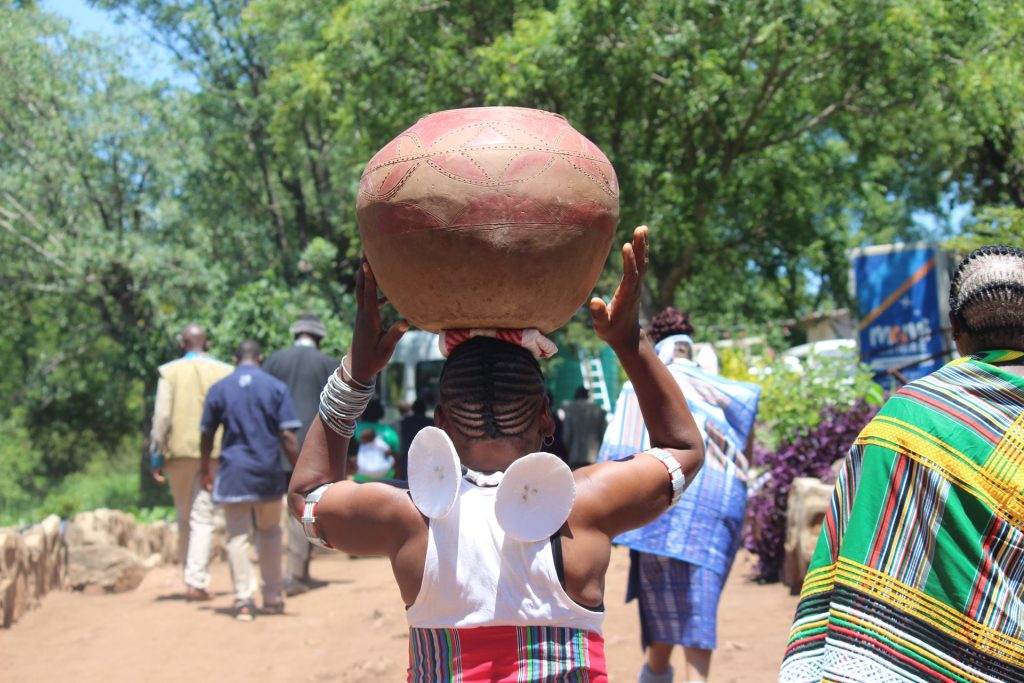
The Vhavenḓa Biocultural Community Protocol can be best understood through the metaphor of the mufaro basket. The customary laws of the Vhavenḓa, national laws affirming their rights and international laws recognising BCPs, are the natural fibres with which the mufaro is made. The basket is filled with the voice of the community expressing their way of life, intangible cultural heritage and identity, and it is closed with a lid, as the mufaro always is. Mufaro are carried by Vhomakhadzi during cultural and spiritual ceremonies, and this signifies the important role that women play in protecting the environment.
As the dust from dancing feet settles, the drums quieten and the sound of the reed flutes fades into the Vuu ḽa Vho Tshitavhe forest, it remains clear that when Indigenous communities protect their sacred natural sites, they are defending more than the environment. They defend life itself. The Vhavenḓa BCP stands as a reminder that protecting the environment is not a crime. It is a right and responsibility carried from generation to generation.