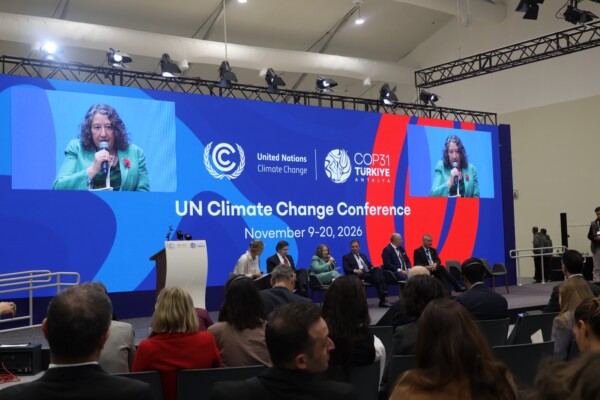
Defenders took a strong stand at the United Nations Framework Convention on Climate Change summit – COP31, in Antalya Türkiye, calling for more protection and painting a sobering picture of the increasing risks and threats facing environmental activists and their communities.
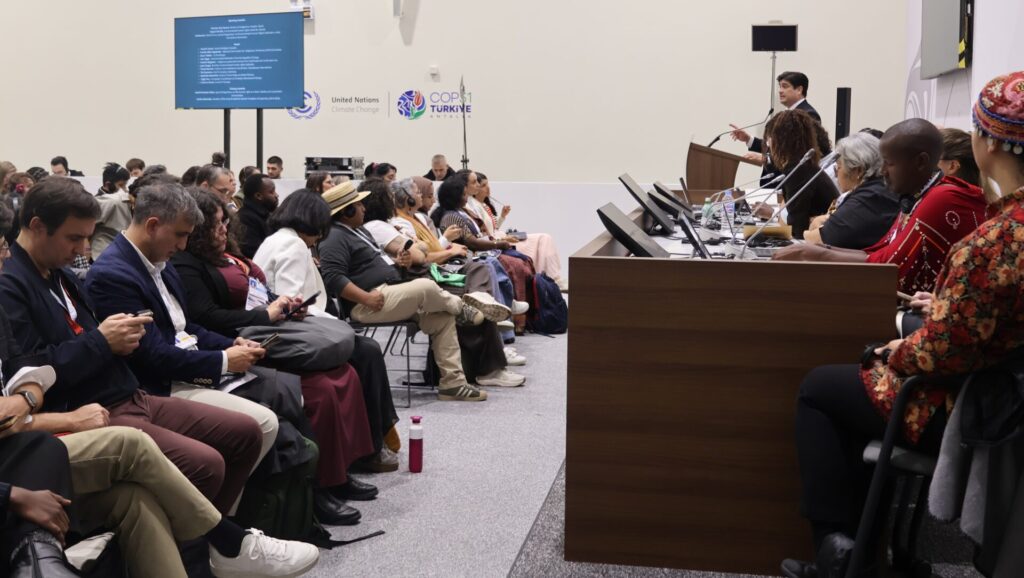
This week defenders from across the world were given a platform to share their experiences at a side event titled Closing the Gap: A Call for Recognition, Participation, and Protection of Environmental Human Rights Defenders in Climate Action. They called on leaders to stand in solidarity and advance solutions that protect defenders.
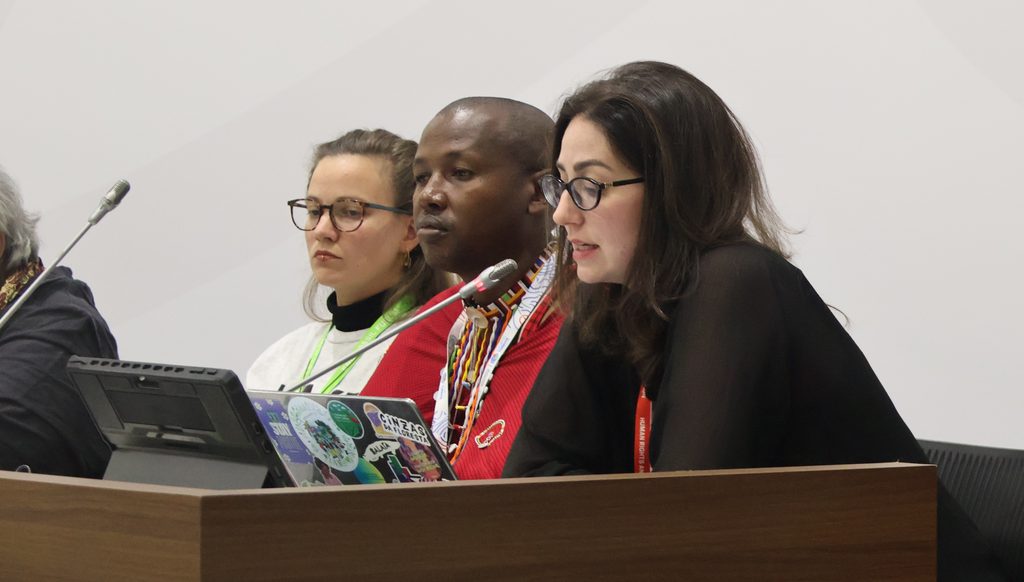
Addressing a full house in Side Event room 9, on Wednesday 11 November, Tuğçe İnce, Campaigns Coordinator for Amnesty International Türkiye, the host country for COP31 said: “Our message is simple. There can be no climate justice without civic space, no meaningful participation without the right to protest, and no just transition without listening to the communities most affected,” Tuğçe İnce, Campaigns Coordinator for Amnesty International Türkiye.
Defenders at risk
Shocking statics emerged during the panel discussions. Gabriella Bianchini, Head of Partnerships at Global Witness noted that at least 124 land and environmental defenders were killed globally in 2025, according to the annual report by Global Witness released in September 2026.
This brings the total number of documented killings to 2,375 since 2012.
On Human Rights Day (Thursday, December 10, 2026) ALLIED will launch its report on non-lethal violence in 2025. Preliminary figures indicate at least 2,045 attacks on Indigenous, land and environmental defenders across 75 countries, the highest number since ALLIED began recording data in 2019.
In 2025, for every killing documented by Global Witness, there were 16.5 reported non-lethal attacks against defenders and their communities. Indigenous Peoples were targeted in nearly one of three attacks.
The violence primarily being reported across sectors at the center of the climate agenda: 21% of attacks driven by businesses related to mining, while 14% was against those raising concerns about oil and gas.
A whopping 123 attacks (6% of the total) was linked to renewable energy projects and transition minerals.
Bianchini said: “And it’s worth underlining that since 2015, when governments endorsed an indicator to track this violence, ALLIED notes that only six of the 191 countries reporting at the High-Level Political Forum have ever acknowledged violence committed against a human rights defender. In the CBD, only 14% of national biodiversity targets mention protecting defenders,”
Bianchini added that defenders should be the ones in decision making spaces.
“They are responsible for protecting the planet. The only reason humanity is not in a worse situation is because of the tirelessness fight of defenders on protecting their territories, forests, water, biodiversity and climate.”
Speaking on their personal experiences as frontline defenders of the environment, Isaac Tobiko from Kenya recalled instances when he feared for his life and that of his family, because he chose to speak out against environmental injustices.
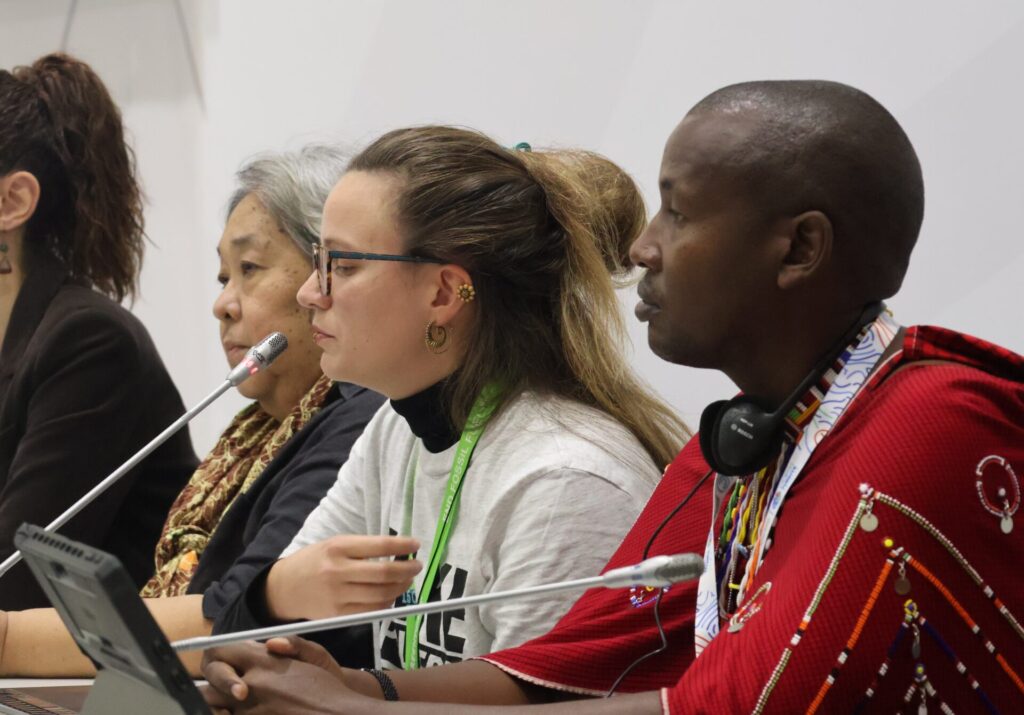
“I am a moving target. There are some places I do not visit, and others where I do not feel safe. What would have happened to my children had they found me? I would have been a statistic like many other HRDs”, said Tobiko.
Ylenia from GreenPeace International applauded the courage and resilience of environmental defenders, while also drawing from her own experience as one of the environmental activists that were arrested for blocking the LNG terminal in Zeeburge, for 30 hours, preventing LNG gas Carrier Arctic Voyager from docking.
“You see the fear as well as the broken determination to protect their homes…You see this and cannot ignore it”. Speaking on her experience, she said “I was lucky because I had an organization backing and supporting me. What if I was not acquitted? What if I was a simple activist alone, facing 5 years in prison?”
The rallying call
The side event was co-organized by members of the LEAD Initiative to strengthen the recognition, participation, and protection of environmental human rights defenders in global climate action and lay the groundwork for a roadmap for dialogue and collective action in the lead up to COP 32. One message that resonated strongly throughout the side event was the power of solidarity and collective action in driving meaningful change and bringing us closer to the impact we seek.
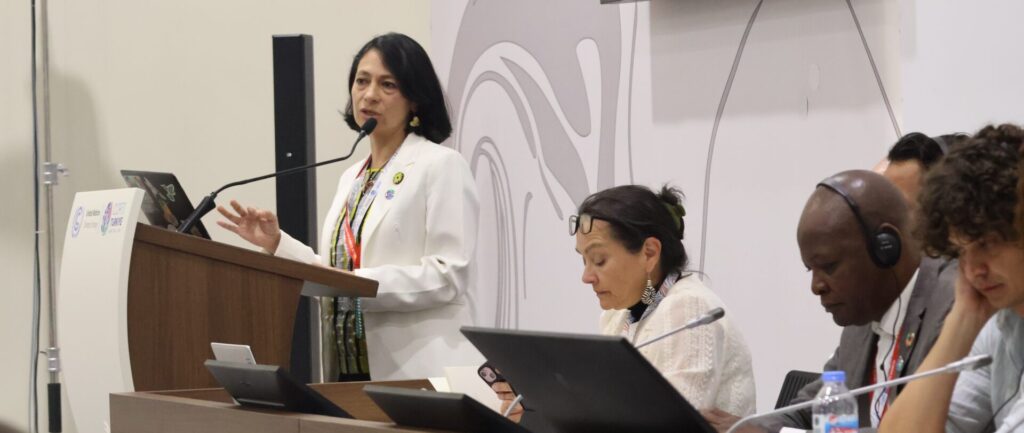
In her closing remarks, Astrid Puentes Riaño, UN Special Rapporteur on the human right to a clean, healthy and sustainable environment, called for zero tolerance to harassment and intimidation targeting environmental human rights defenders. She emphasized that the world is facing a systemic and serious situation that needs urgent redress. Rather than addressing the root causes of the crisis and advancing solutions to the problem, the world is killing the messenger.
Defenders should be allowed to defend their territories, land and biodiversity, and not be criminalized for defending their human rights.
“Protecting human rights is a HUMAN RIGHT,” said Riaño.
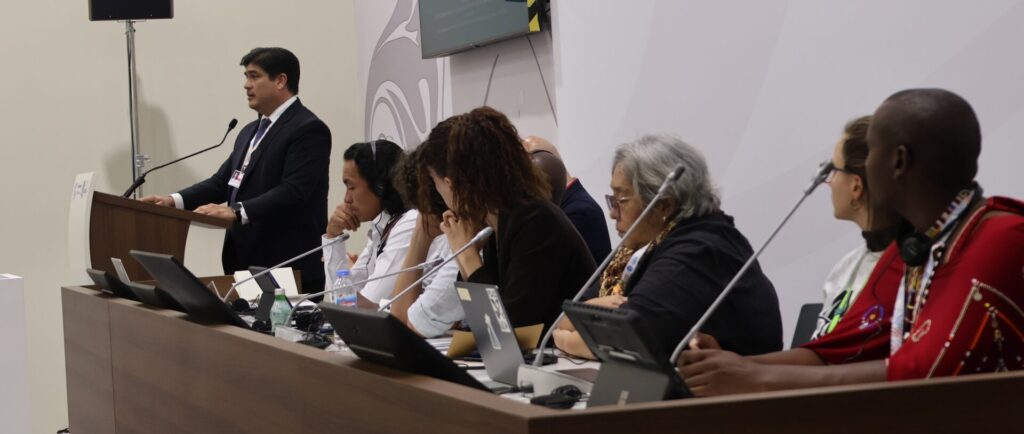
Carlos Alvarado, member of the Club de Madrid and former president of Costa Rica (2018-2022) called for unity and said they would continue to stand by initiatives such as LEAD.
“We need to be in coalitions, to move forward this cause, and for government…and myself we will keep supporting LEAD and these initiatives, because it is the right thing to do.”
Tawonga Chihana Natural Justice Coordinator for the African Environmental Defenders Initiative said that the experiences of environmental defenders form a shared narrative that transcends continents, contexts and identities.
“Across the world, the message remains the same: much more needs to be done to recognise, respect and protect environmental defenders. And that action must begin within our own countries, with the Parties to the UNFCCC at COP.”
Through a Protection, Power, Remedy policy brief, Natural Justice is calling on Parties to put local communities and environmental defenders at the centre of decision-making: to ensure they have the power to decide and participate meaningfully before projects are approved or decisions are locked in; to respect their self-determination and their distinct right to Free, Prior and Informed Consent (FPIC), including the right to withhold consent.