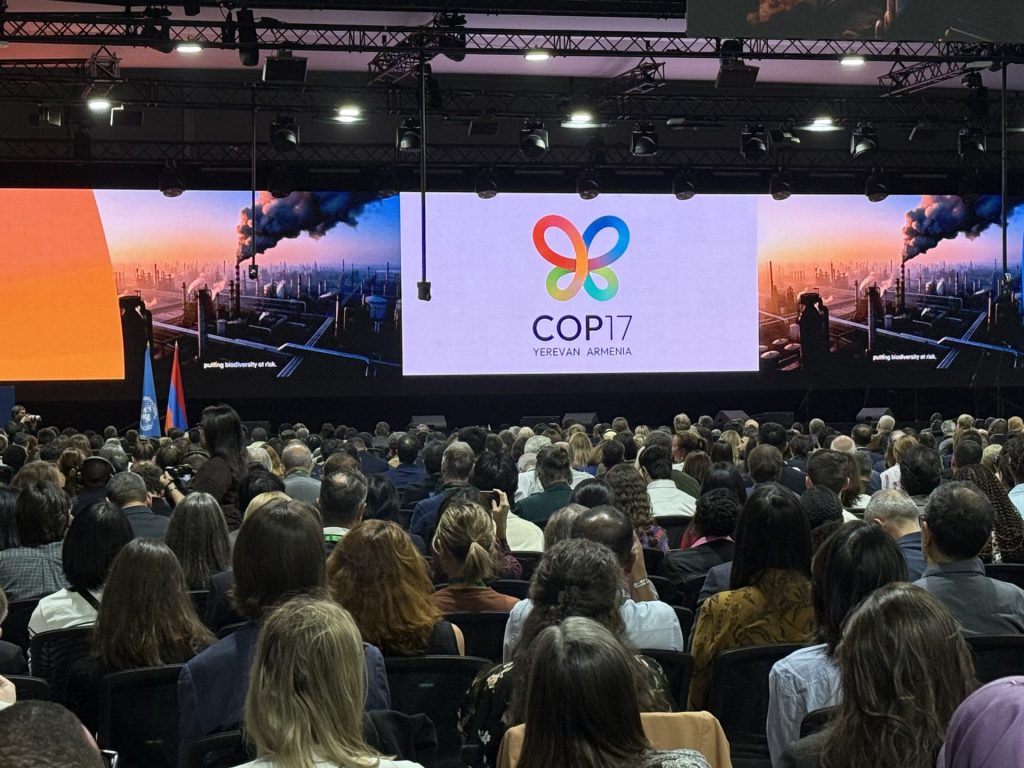
Alongside climate change, the decline of biodiversity presents a grave threat to human life. At the international negotiations on the Convention on Biological Diversity this week (the COP17) in Yerevan, Natural Justice will be joining hundreds of other members of civil society and community representatives in assessing the work of governments to protect biodiversity on land and in the ocean.
This COP17 also provides for the first global review of progress on the Kunming-Montreal Global Biodiversity Framework (KMGBF), four years since its adoption in 2022 and halfway to the 2030 deadline.
This review will allow us to understand what the priorities of the countries are and what they choose to report on and what they leave out. It also provides an opportunity to assess how countries’ biodiversity commitments translate into concrete actions to recognise, protect and support Indigenous people and local communities’ rights and participation, and identify gaps and priorities to inform future investments, funding decisions, and programmes of work, ensuring that commitments translate into meaningful action.
Natural Justice’s contributions to COP17
Ahead of the COP17, Natural Justice has contributed to the development of national positions, particularly in Madagascar, South Africa, Kenya and Senegal. Alongside allies, Natural Justice contributed to the Human Rights and Biodiversity Working Group’s review of the integration of Human Rights-Based Approaches (HRBAs) into National Biodiversity Strategies and Action Plans (NBSAPs) and seventh national implementation progress reports, as well as to the drafting and endorsement of the Working Group’s key asks.
Through the Community Environmental Legal Center (CRJ) in Madagascar, Natural Justice disseminated accessible information to local communities about COP17 and the key discussions expected to take place, highlighting their potential implications for national policies and implementation at the local level.
What are our key positions at COP17
There is a risk that during negotiations, human rights language will be weakened or removed from the text, which is something that Natural Justice and allies will be focusing on preventing, bringing the local experiences and supporting the perspectives of the communities we work with.
Conservation measures must respect human rights, be accountable to communities, and have effective and accessible grievance mechanisms. They must embody access to justice, provide protection of environmental human rights defenders, allow for the full, effective and gender-responsive participation of rights holders in decision-making concerning their territories. Embedded in this is access to information and recognition of Indigenous peoples’ and local communities’ rights and governance systems.
In relation to governance of conservation and protected areas, we support the call for the recognition of governance diversity and inclusion of communities and the ways they govern their territories.
Strong biodiversity protection also demands land rights and requires for greater recognition of the land tenure rights of Indigenous and local communities. Community-generated data and perspectives must be appropriately considered in biodiversity monitoring and reporting.
We also support community-based monitoring as a means of recognising communities’ knowledge, strengthening their role in biodiversity assessments, and ensuring that conservation progress reflects their values, rights and priorities. This includes developing clear safeguards to ensure their free, prior and informed consent, protect sensitive traditional knowledge and community-generated data, respect community protocols and data sovereignty, and prevent misuse.
Across these priorities, Natural Justice supports the positions of the ICCA Consortium and the International Indigenous Forum on Biodiversity (IIFB), and joins the key asks advanced by the Human Rights and Biodiversity Working Group (below).