Ju/’hoansi – pronounced “JOO-kwan-see,” featuring a click where the forward slash appears.
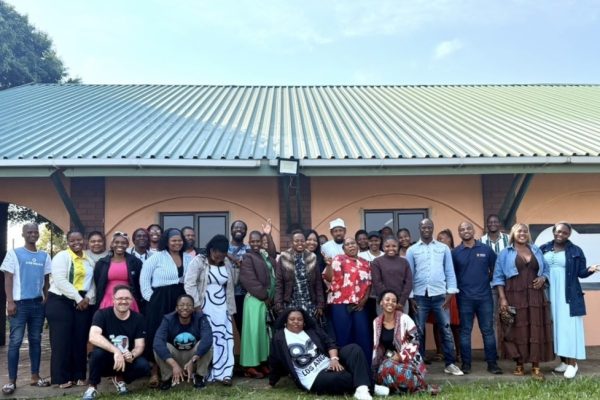
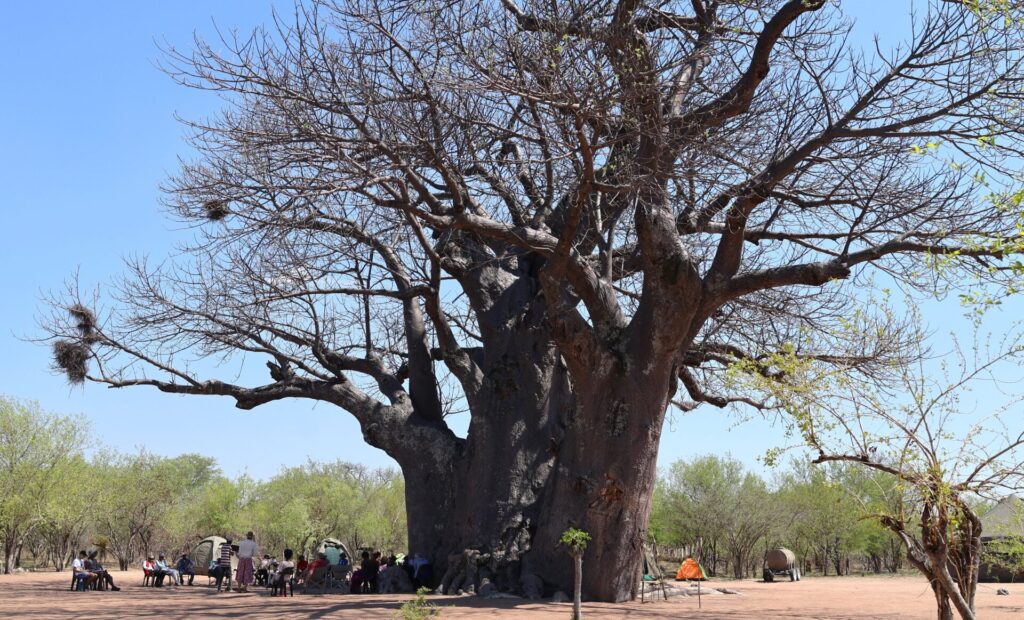
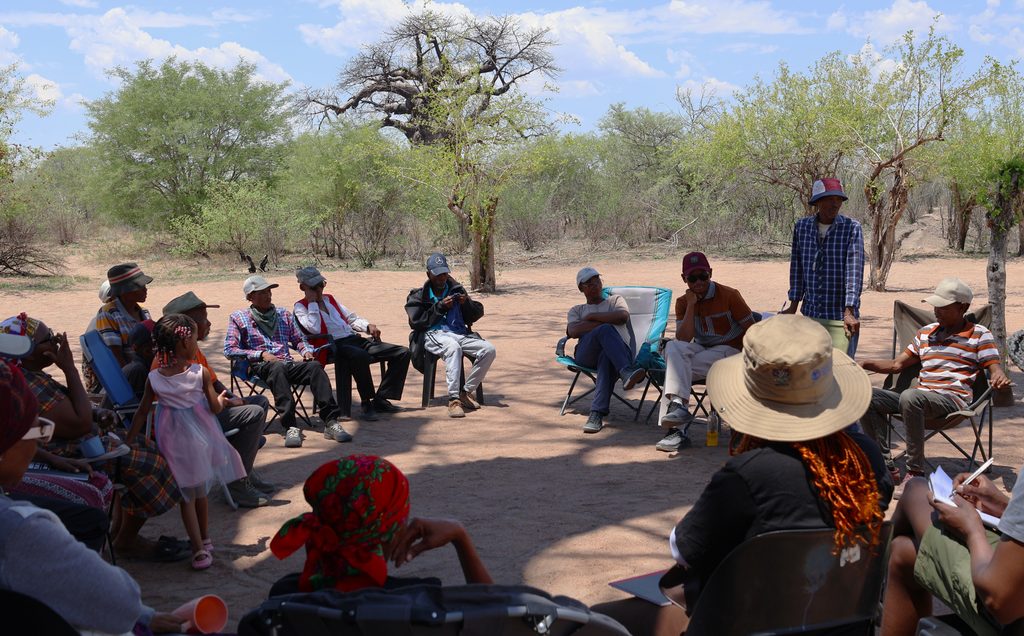
In October 2026, a team from Natural Justice headed north through Namibia, close to Botswana’s border, where they met the indigenous Ju/’hoansi San community, in the shade of an ancient baobab tree.
The sun was hot and the sand was soft, as an infrequent breeze wafted through the animated discussions of those who gathered under the tree. The voices came from surrounding villages and communities situated within the Nyae Nyae Conservancy – the second largest communal conservancy and the first gazetted communal conservancy in Namibia in 1998 – under the Nature Conservation Amendment Act 5 of 1996.
This conservancy is vital in supporting local livelihoods. Conservancies in Namibia in general, play an important role in linking the protection of wildlife directly to livelihoods and can give communities conditional rights to manage and benefit from natural resources, supporting joint venture tourism and hunting agreements.
This meeting was an important step in an empowering process in which the Ju/’hoansi will begin to document their way of life, their heritage, their culture, a process which may enable the community to affirm and defend their biocultural rights.
Through initiating what is known as a Biocultural Community Protocol (BCP) process – Indigenous communities can explore and affirm who they are, how they live, and their interdependent relationship with their territory, natural resources, and cultural practices. BCPs represent the living voice of Indigenous communities.
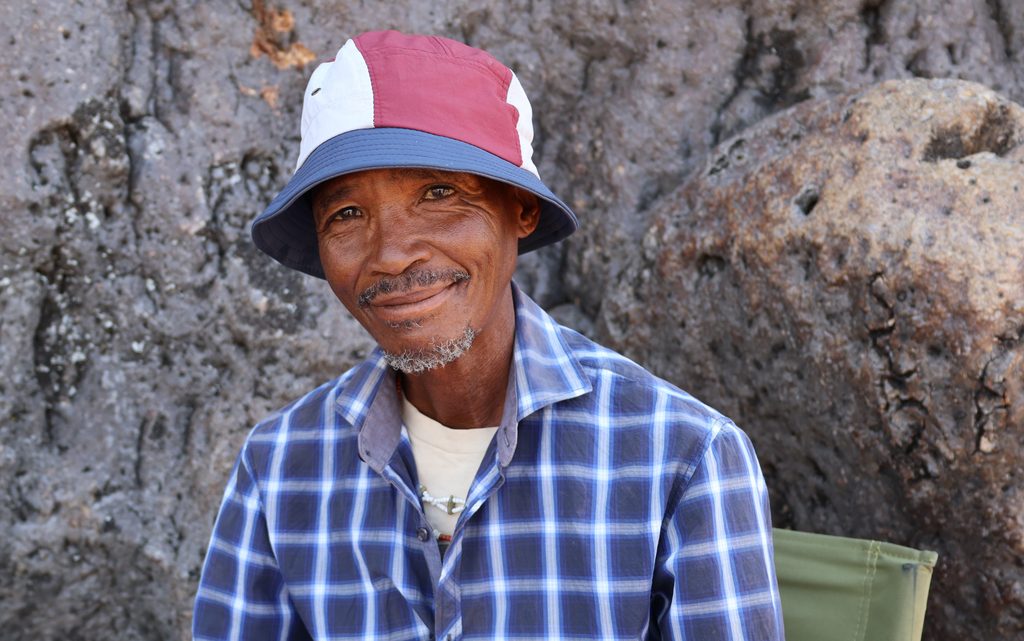
At the meeting, Kaqece Kallie N!ani, a community member of the Ju/’hoansi living in Tsumkwe reflected on the importance of the BCP process:
“We want to keep things natural, we want to be with nature and the reason I think the BCP is so important is that it tells our story, so that when other people come in, they will know how we live here. They must learn to respect our way of life as we respect it. They must not come in and do what they want to do – we want people to get our permission first, before they use our knowledge and our resources – that is why the BCP is important and that is why we want it, so that it can guide us and we can work with it. We want it written down, and that everyone will have respect the way we respect,” he said.
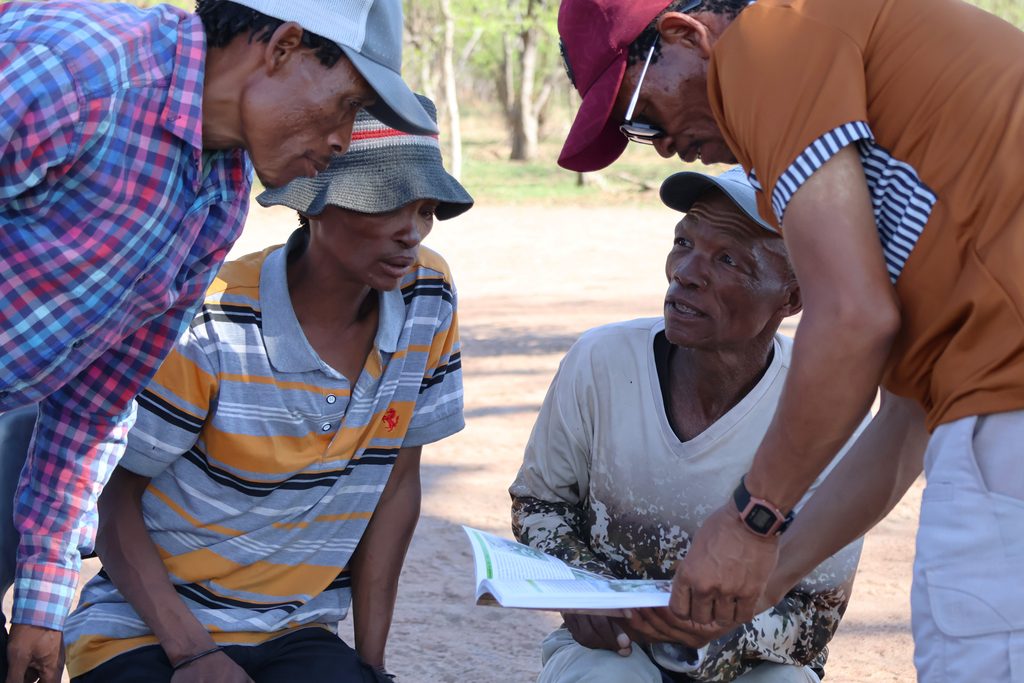
Ju/’hoansi San living in the Nyae Nyae Conservancy
The Nyae Nyae conservancy covers 8,992 square kilometres of land, borders the Khaudum National Park and is part of the Kavango-Zambezi Trans frontier Conservation Area spanning Namibia, Botswana, Angola, Zambia and Zimbabwe and plays an important role in supporting the livelihoods of local communities.
It is known for its rich cultural heritage, wildlife conservation commitments and became the first registered communal conservancy to be gazetted in 1998 in terms of the Nature Conservation Amendment Act 5 of 1996. Within its perimeter you will find many large baobab trees, a variety of plant species and a range of wildlife, including lion, buffalo, elephant and wild dogs. The harvesting of Devil’s Claw, a protected plant that is used globally as an anti-inflammatory and for the treatment of rheumatism and arthritis, brings in some income for the conservancy but the community have not received benefit-sharing for the use of the associated traditional knowledge.
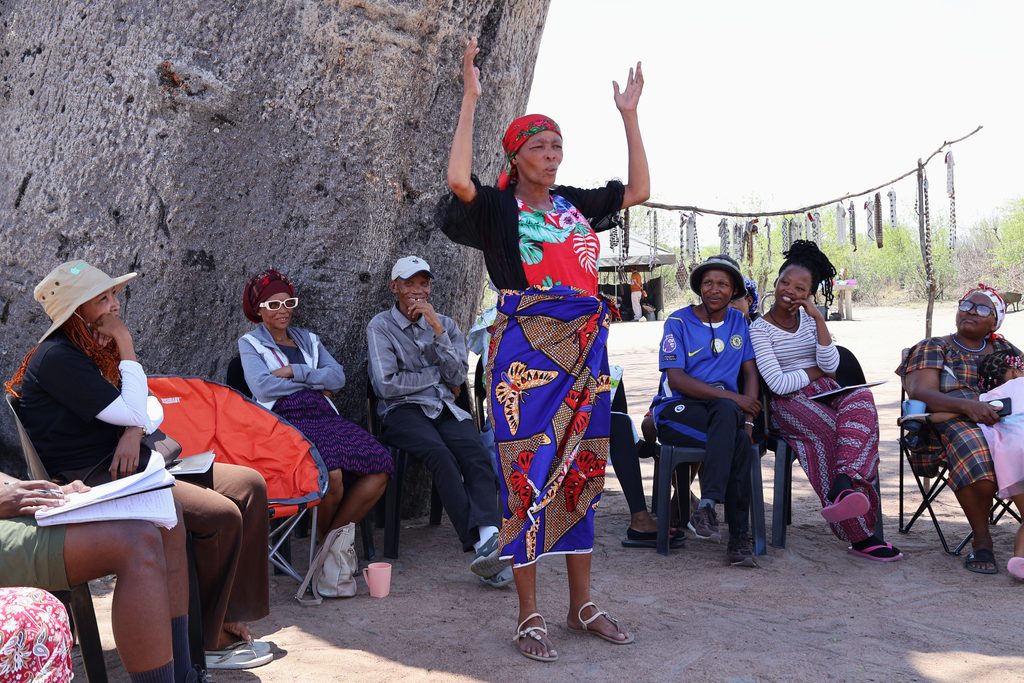
Livelihoods and life in Nyae Nyae Conservancy
In partnership with the conservancy, the Ju/’hoansi Traditional Authority (JUTA) plays a significant role in supporting the livelihoods of the Ju/’hoansi people. In terms of the Traditional Authorities Act of 2000, the JUTA gives direction to the customs, social and political aspects of Ju/’hoansi society. Together with the conservancy, JUTA makes decisions over the management of land, the allocation of rights over it and ultimately, sustainable land and natural resource use.
Craft making is a big part of the community’s culture and has become an essential lifeline for Ju/’hoansi women in Nyae Nyae Conservancy. Furthermore, members of the Nyae Nyae conservancy receive annual income benefit distributions from the conservancy through the activities that they manage on behalf of its members.
Challenges
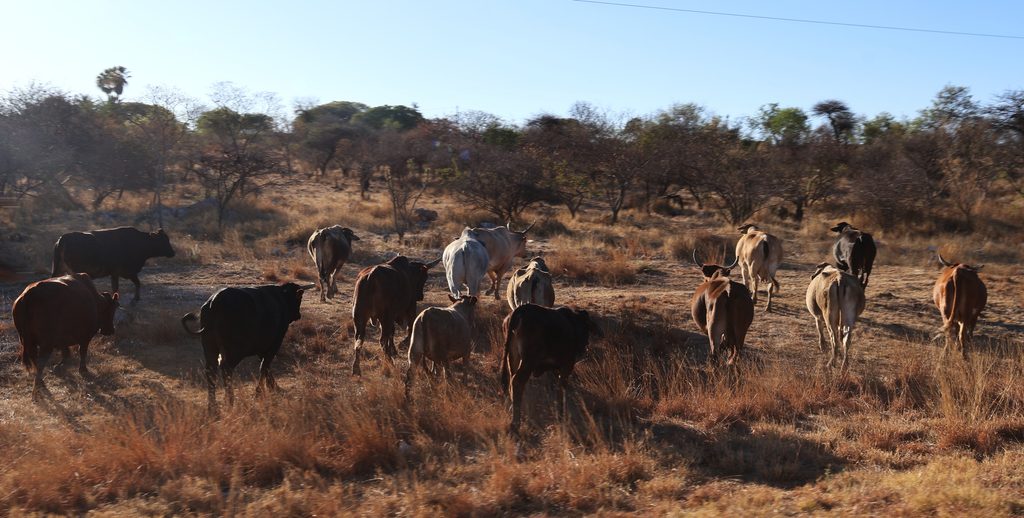
While life is generally tranquil and simple in the conservancy, it comes with many challenges. There have been varying issues related to land use conflicts, illegal grazing from non-community members, hunting rights and legislation among others. The illegal grazing of livestock by non – community members is a big concern and there have been previous legal actions initiated by the conservancy and JUTA to prevent illegal grazing that have not succeeded. There is very little political will and support from government to resolve these conflicts.
Another factor is that the increase of livestock competes with the traditional use of the Ju/’hoan land, which include hunting and gathering. This competition between illegal livestock grazing and wildlife leads to conflict between the Ju/’hoansi traditional communities and non-community members and the only remedy left to the conservancy and JUTA is to approach the courts. While several laws direct the actions of the conservancy and JUTA, their application to support the actions of conservancy and JUTA are not always clear.
JUTA is working together with the Nyae Nyae conservancy and community forest with the assistance of the Human Environment Law Programme (HELP), to challenge the legality of the cattle grazers in Nyae Nyae, in current ongoing litigation before the High Court of Namibia.
Furthermore, a joint “legal committee” existing of members of JUTA and the Conservancy was established in 2024, to deal with among other things the illegal cattle grazing issue in the conservancy. Several meetings have already taken place, with all relevant parties, including HELP and the Nyae Nyae Development Foundation of Namibia (NNDFN) as important facilitators.
BCP benefits for the community
Generally, a BCP sets out a community’s own rules, procedures and values for how outsiders like companies and governments should interact with their territory, knowledge, and natural resources. The information captured is therefore unique and relevant to different Indigenous communities. It is a powerful tool for articulating free, prior and informed consent.
The UN Declaration on the Rights of Indigenous Peoples (UNDRIP) affirms that indigenous people have right to maintain, control, protect and develop the cultural heritage, genetic resources and indigenous knowledge and that external parties require the free, prior and informed consent.
Cwi Dam, who lives and works in one of the nearby villages, aims to get involved in writing the BCP. He said: “The importance of BCP in this community is to guide the rights of the Ju/’hoansi people in the Nyae Nyae Conservancy. To guide them in terms of their land and every natural resource which they have within their area.”
N!ae Veronica Kagece said: “I feel it’s not just important, I feel it’s VERY important because it’s going to enable our people to use their traditional ways that they have been using and also to enable to gather their traditional (pots or plants) that they have always been gathering and going back to their old ways of life too. And also, to show our youth that this was our ways before, instead of these modern ways that the youth are focusing on now.”