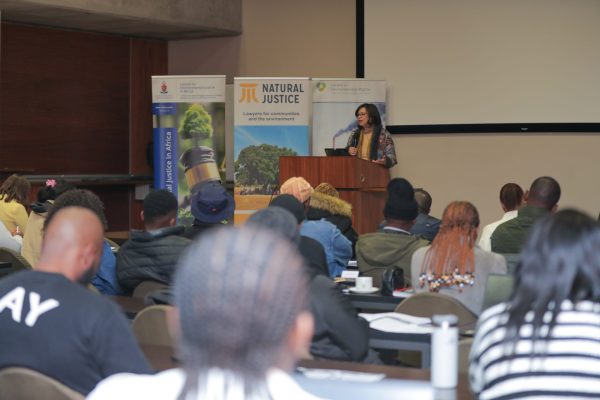
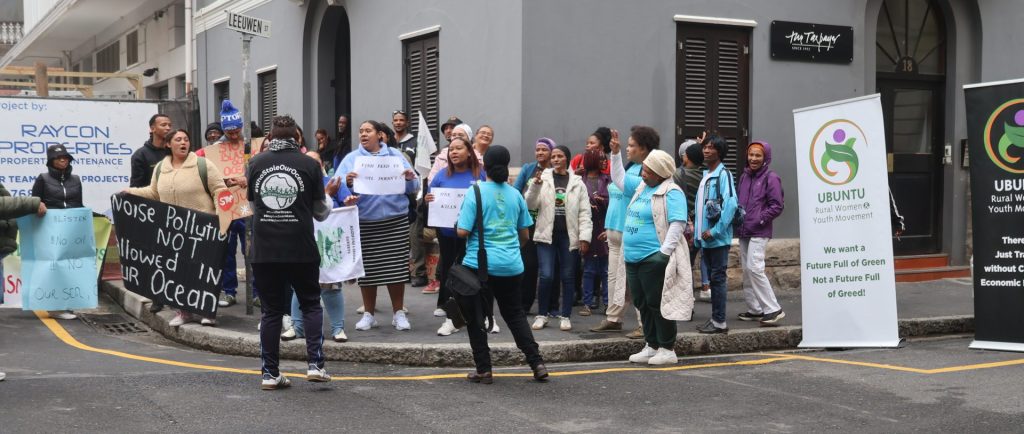
On Tuesday afternoon (2 June 2026), the Western Cape High Court concluded a two-day hearing in the ongoing legal challenge by Aukotowa Fisheries Primary Co-operative, The Green Connection and Natural Justice (the Applicants) against the State and TGS Geophysical Company UK Ltd. According to The Green Connection’s Outreach Ambassador, Neville van Rooy, “A key issue was whether decision-makers had access to, and properly considered, all relevant information before approving the project. Given its potential consequences for marine ecosystems and coastal livelihoods, this case is not only about compliance – it is about transparent and lawful decisions that genuinely serve the public interest.”
The case concerns the environmental authorisation – granted by the Department of Mineral and Petroleum Resources (DMPR) and confirmed on appeal by the Minister of Forestry, Fisheries and the Environment – of a large-scale offshore 3D seismic survey offshore of South Africa’s West Coast to search for oil and gas deposits. Small-scale fishers and civil society organisations previously appealed the decision, but these appeals were dismissed by the Minister of Forestry, Fisheries and the Environment. They approached the courts to review and set aside these decisions.
The Applicants contend that several critical issues were not adequately assessed before environmental authorisation was granted, including the risks posed by seismic blasting – high-intensity sound pulses used to map the seabed for potential oil and gas deposits – to marine species and the ecosystems on which coastal communities depend.
“The need and desirability assessment for the project focuses largely on the projected economic benefits of the project. However, what is missing is a fair assessment of the potential costs, risks and consequences for coastal communities, marine ecosystems and future generations of the oil and gas value chain, which starts with seismic surveys. It is reckless not to consider the full picture. It’s like deciding to buy a house because of the view or the size, without checking whether the roof leaks, whether the area floods in winter, or what the monthly costs will be. Responsible decision-making seeks to weigh the potential benefits against long-term risks and consequences,” adds van Rooy.
“We therefore hope the court, just like in the Searcher Geodata case, recognises that important environmental and social impacts were not adequately considered before authorisation was granted,” he says.
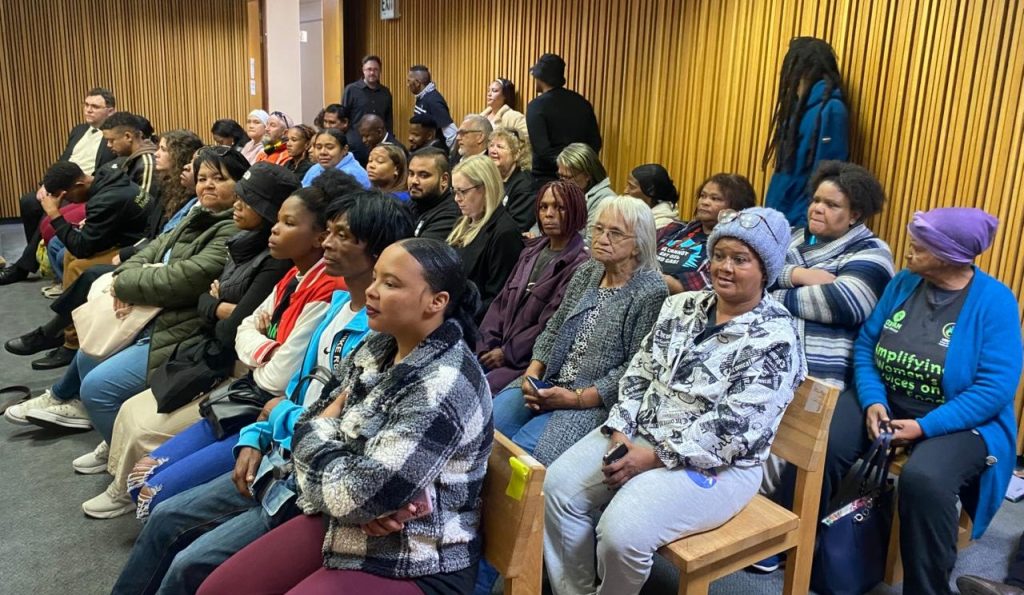
The case also focused on whether “need and desirability” were properly assessed. This means thoroughly checking to make sure the project is needed, environmentally responsible and socio-economically justified. And while there is an ongoing debate about energy security, it remains critical to note that even if there would be local production of oil and gas, it would not be cheaper but instead opens the country to vulnerability and volatile global markets.
Walter Steenkamp of Aukotowa Fisheries Primary Co-operative says, “With decisions of this scale, caution is essential because if the fish are gone, what alternatives remain for our communities? As unemployment, poverty and inequality continues to grow in the country, we, as coastal communities, want to live with dignity, we do not want to become statistics. Had all relevant information been properly considered, government decision-makers would know that the impacts on small-scale fishing communities and coastal livelihoods could be devastating.”
Melissa Groenink-Groves, Programme Manager of the Defending Rights Programme at Natural Justice says, “In addition to raising arguments about deficiencies in the basic assessment report, which informed the decisions, it was clear that the Director-General in DPMR did not have the assessment or the specialist reports before him to consider before he granted the environmental authorisation. We remain optimistic about the result and trust that Judge Judith Cloete will recognise the impacts that seismic surveying can have on the environment and coastal communities whose livelihoods depend on the ocean.”
The approval of the project, despite evidence of the potential harm to people, the environment and the climate, raises broader concerns about how energy decisions are being made and whose voices are prioritised.
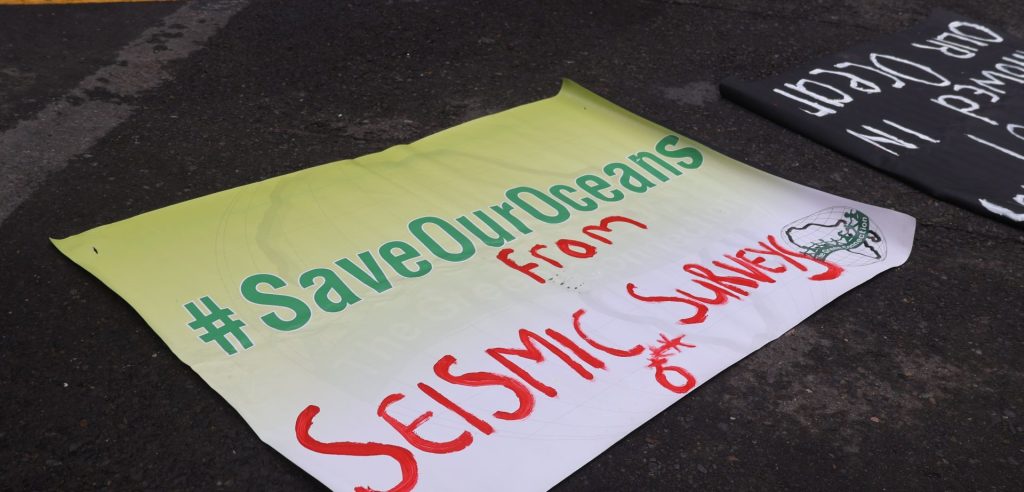
“This case also highlights another question that lies at the heart of this case, and the other legal challenges we have brought: how can South Africa claim to be committed to reducing greenhouse gas emissions under the Paris Agreement when approximately 90% of its ocean territory is under lease for offshore oil and gas exploration? Oil and gas exploration cannot be considered in isolation. Decision-makers should assess full lifecycle impacts – including environmental, social and climate consequences – rather than focussing narrowly on speculative economic benefits,” adds van Rooy.
Steenkamp concludes, “All we want is to protect our fishing grounds and our way of life from activities that could disrupt marine ecosystems or contribute to worsening climate change because it could affect our ability to earn a living and provide for our families. If the impacts on small-scale fishers and coastal communities were not properly considered, then a crucial part of the decision-making process was missing.”
Judgment has been reserved and will be delivered in due course.