Biocultural Community Protocols

Biocultural Community Protocols

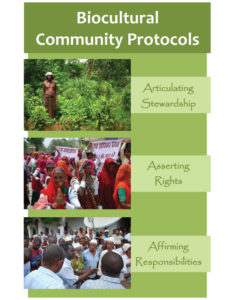
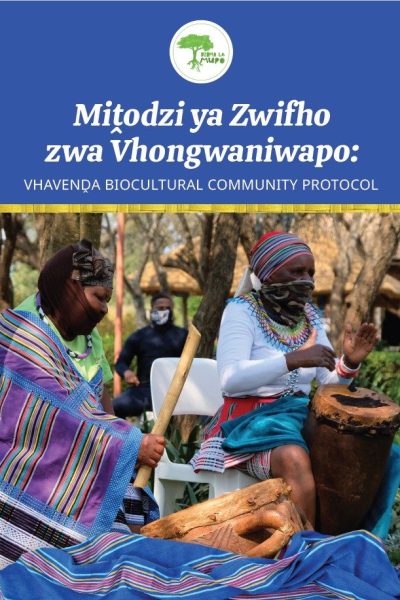
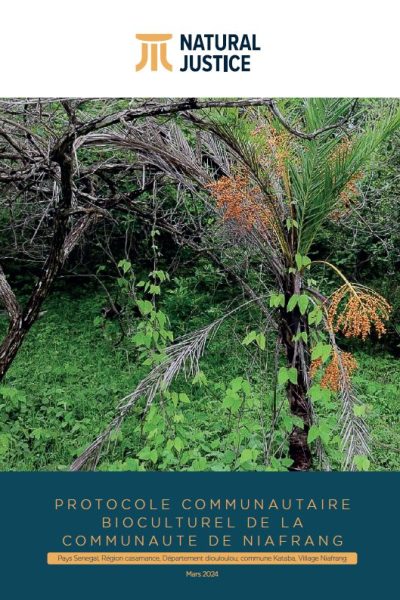
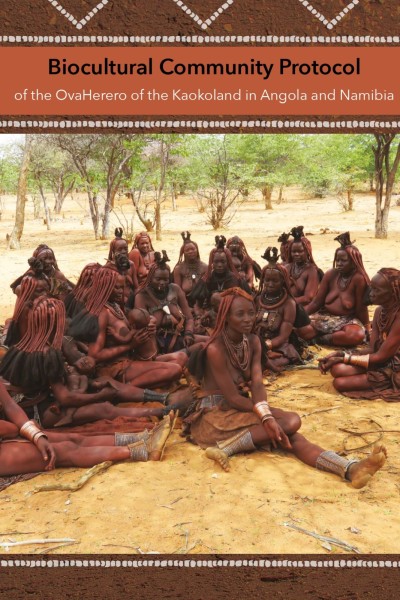
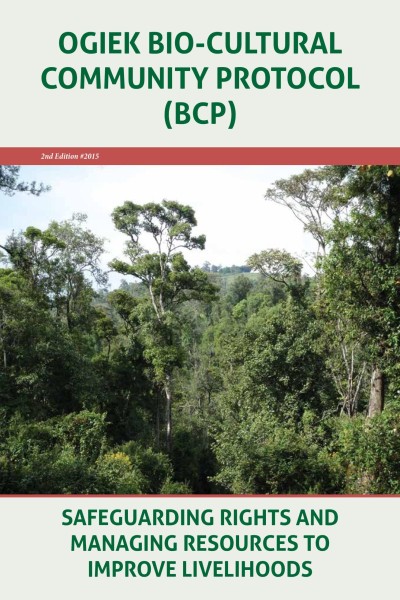
Biocultural community protocols are a response to the challenges and opportunities set out above. Although each is adapted to its local context, a biocultural community protocol is generally a community-led instrument that promotes participatory advocacy for the recognition of and support for ways of life that are based on the customary sustainable use of biodiversity, according to standards and procedures set out in customary, national, and international laws and policies. In this sense, biocultural community protocols are community-specific declarations of the right to diversity. Their value and integrity lie in the process that communities undertake to develop them, in what they represent to the community, and in their future uses and impacts.

The process of developing and using a biocultural community protocol is an opportunity for communities to reflect on their ways of life, values, customary laws, and priorities and to engage with a variety of supporting legal frameworks and rights. A biocultural approach to the law empowers communities to challenge the fragmentary nature of State law and to instead engage with it from a more nuanced and integrated perspective and assess how certain laws may assist or hinder their plans for the future. A wide variety of community members are involved by integrating legal empowerment processes with endogenous development and communication methodologies such as group discussions, written documentation, various types of mapping and illustrations, participatory video and photography, performing arts, and locally appropriate monitoring and evaluation. Biocultural community protocols vary in how they are documented, shared, and utilized and have been highlighted as something meaningful and affirmative that a community can be proud of. The approach is intended to mobilize and empower communities to use international and national laws to support the local manifestation of the right to self-determination.

Communities establish a firm foundation upon which to develop the future management of their natural resources by setting out their values and customary procedures that govern the management of their natural resources, as well as their procedural and substantive rights to, among other things, be involved in decision-making according to the principle of free, prior and informed consent, develop the specific elements of projects that affect their lands, and ensure that they are involved in the monitoring and evaluation of such projects. This provides clarity to the drivers of external interventions such as protected areas, ABS deals, REDD projects, and payment for ecosystem services schemes, and can help communities gain recognition for, among other things, their territorial sovereignty, community-based natural resource management systems and community conserved areas, sui generis laws, sacred natural sites, and globally important agricultural heritage systems. In this regard, biocultural community protocols enable communities to bridge the gap between the customary management of their biocultural heritage and the external management of their resources, as mandated by positive legal frameworks. They also help communities to minimize the power asymmetries that often characterize government-community relations and promote a more participatory and endogenous approach to the future governance of their territories, natural resources, and biodiversity. By enabling a community to be proactive in relation to agencies and frameworks to which they have normally been reactive, protocols have the potential to shift the dynamic of conservation initiatives from merely attempting to ‘ensure’ communities’ participation to becoming inclusive, locally appropriate processes driven by legally empowered communities.

Natural Justice and our partners have developed a dedicated website on community protocols. We welcome you to visit the site and provide any feedback or contributions.


Publications

Bio-cultural Community Protocols: A Community Approach to Ensuring the Integrity of Environmental Law and Policy (Natural Justice and UNEP, 2009)

Read More

Biocultural Community Protocols for Livestock Keepers (LIFE Network, LPP, and LPPS, 2010)

Read More

Endogenous Development Magazine, No. 6

Read More

Latest News
  • African Indigenous Peoples Declaration on Rio +20
    Via www.mpido.orgA gathering of indigenous African communities adopted the Declaration of Indigenous Peoples of Africa on Sustainable Development and Rio +20 in Arusha, Tanzania on 19 April 2012. The …

  • Seeking ICT Support: May-July, 2012
    Natural Justice is seeking a Cape Town-based service provider to support our organisation in maintaining, updating and occasionally developing further Natural Justice’s internet presence. Successful a …

  • New IUCN-CEESP Newsletter
    The International Union for the Conservation of Nature’s Commission on Environmental, Economic and Social Policy’s (IUCN-CEESP) latest newsletter was released in May. The newsletter reports on the act …

  • Community Meeting in Bwabata Park, Namibia
    Through its African Biocultural Community Protocol (BCP) Initiative, Natural Justice travelled to the Bwabwata National Park in West Kaprivi, Namibia during the week of 7th May to meet with residents. …

  • Wapichan Map 1.4 Million Hectares
    Photo from www.forestpeoples.orgIn a bid to protect over 1.4 million hectares of community land, the Wapichan community of Guyana have produced a digital map of their territories. The mapping project, …

Photos


Images from our work in Africa, Asia, and the Americas
View More